How does a foreign buyer purchase an apartment in Aruba?
A foreign buyer purchases an apartment in Aruba the same way an Aruban does: there is no restriction on foreign ownership, title is conveyed in the buyer's own name (or a company's) by an Aruban civil-law notary, and the buyer pays a two-tier transfer tax at closing. At YOO Aruba, a 26-residence building in Ponton, Oranjestad, that process runs from a compliance check on the buyer's documents, through architect-certified construction milestones, to a completion the developer commits to no later than Q4 2027.
Can a foreigner own an apartment in Aruba outright?
Yes. Aruba imposes no restriction on foreign ownership of real estate, so a buyer living in the United States, Canada or Europe holds a YOO Aruba residence on the same footing as an islander: full title, registered in the buyer's own name or in the name of a company, with no residency requirement and no local partner. Ownership does not depend on a visa or a permit, and it does not by itself confer one; living on the island beyond a visit is a separate application to DIMAS, the Aruban immigration department, and the sales team does not advise on it.
The instrument that makes this work is the Aruban civil-law notary, a public officer rather than one party's lawyer. The notary conveys the deed free of mortgages and encumbrances, registers the transfer, and releases the purchase price to the developer only once that conveyance is complete, so a buyer never pays for a title that has not been cleared. For a buyer abroad the paperwork runs through the notary remotely, with the sales team coordinating each step by email and video call; a trip to Oranjestad is a choice, not a condition of the purchase.
What documents does the developer ask for before the agreement is issued?
Before the sale and construction agreement is issued, the developer runs a compliance check on the buyer, and the list is short. An individual provides four items:
- a valid passport;
- a proof of address less than three months old;
- the most recent tax return from the buyer's home country;
- a bank statement showing the source of the funds.
A buyer purchasing through a company adds the company's incorporation documents and the passports of its directors. The check is the developer's own know-your-customer step: it happens once, before contract, and it is the same list for every one of the 26 residences. It involves no Aruban permit of any kind, because it is a purchase requirement rather than an immigration one, and it is worth assembling early, since the agreement cannot be issued until the file is complete.
What tax does a buyer pay at closing in Aruba?
The buyer pays Aruba's transfer tax, the overdrachtsbelasting, at the notary, and it is a two-tier tax rather than a single rate: 3% on the part of the value up to and including Afl. 250,000, and 6% on the part of the value above that line. The tiers have been in force since January 2023 under the Departamento di Impuesto's tax plan for that year. The threshold is written in florins; at the fixed peg of Afl. 1.79 to the US dollar it corresponds to roughly US$139,665, an approximation for orientation only, since the statutory figure is the florin one. The notary states the exact amount for the residence you choose; this page gives the rates and stops there.
There is nothing to add on the buyer's side. Aruba has no buyer-side incentive law and no relief regime for a residential purchase, so a page that promised a saving at closing would be describing another country. What a buyer gets instead is a short, legible bill: one transfer tax, in two tiers, paid once.
| Tax | Rate | Charged on | Who pays | When |
|---|---|---|---|---|
| Transfer tax (overdrachtsbelasting) | 3% up to Afl. 250,000; 6% above | The value of the property, in two tiers | The buyer | Once, at the notary |
| Land tax (grondbelasting), non-resident owner | 0.6% | The total assessed value, set for five-year periods | The owner | Every year |
What does an owner pay every year after closing?
Land tax, the grondbelasting, is the annual tax. For an owner who is not a resident natural person of Aruba — a non-resident individual, and every company wherever it is based — the rate is a flat 0.6% of the total assessed value of the property, the rate the Landsverordening grondbelasting has carried since its 2018 amendment took effect in 2019. The assessed value is set by the tax office for five-year periods rather than reset each year, and it is that assessed value, not the purchase price, that the rate is applied to. A foreign buyer who later becomes an Aruban resident is not fixed at 0.6% either: resident natural persons are assessed on a progressive scale, and the move from one to the other follows the change of status.
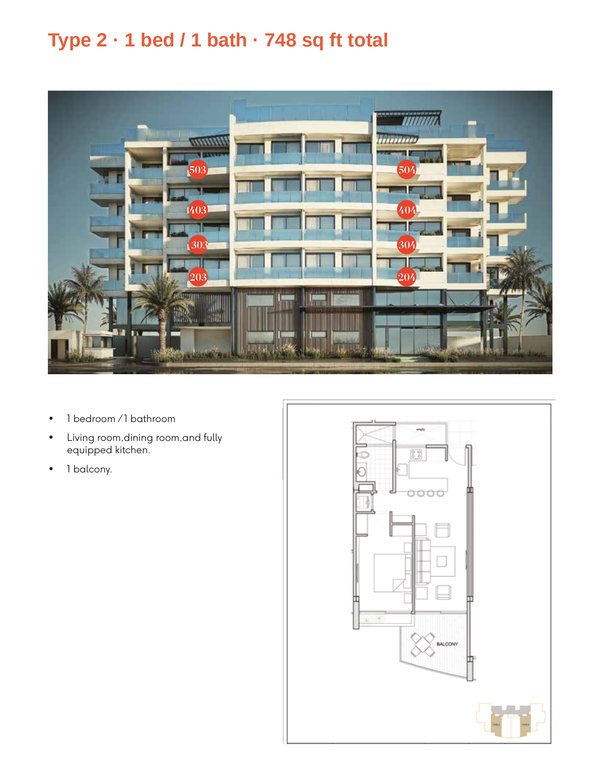
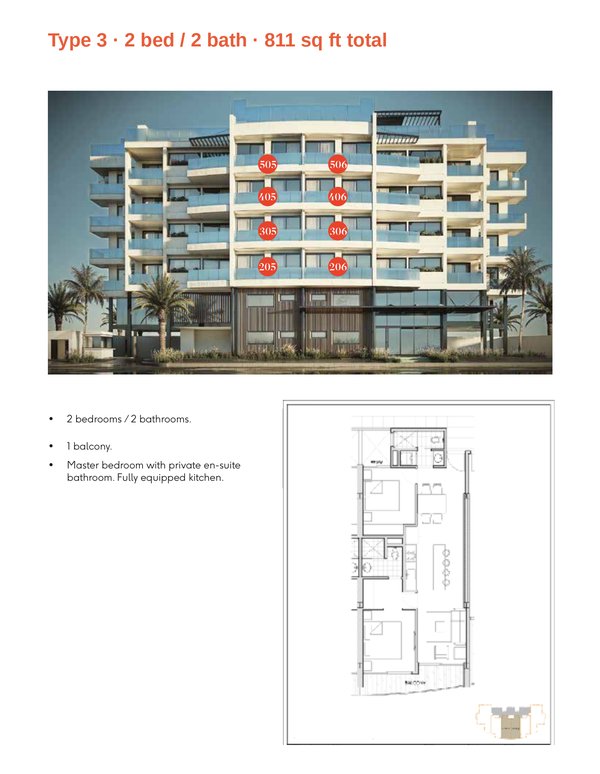
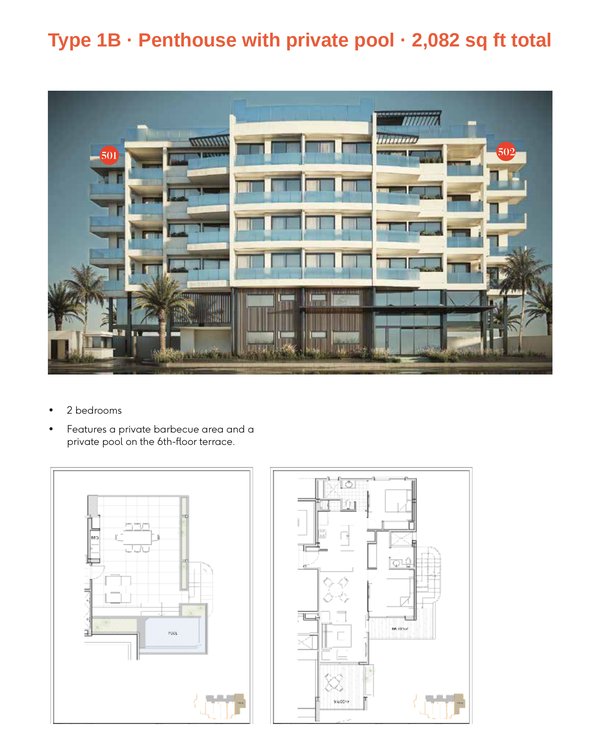
Beyond the land tax an owner carries the building's homeowners' association charges, which at YOO Aruba are levied per square foot of chargeable area, so a 748 sq ft one-bedroom bears a smaller share than a 2,082 sq ft penthouse, plus electricity and water. Whether a gain on a later resale is taxed in an individual's hands is a question this page answers neither way: the position is not settled in the material behind this site, and it belongs with an Aruban tax advisor.
How is construction verified, and when is the residence delivered?
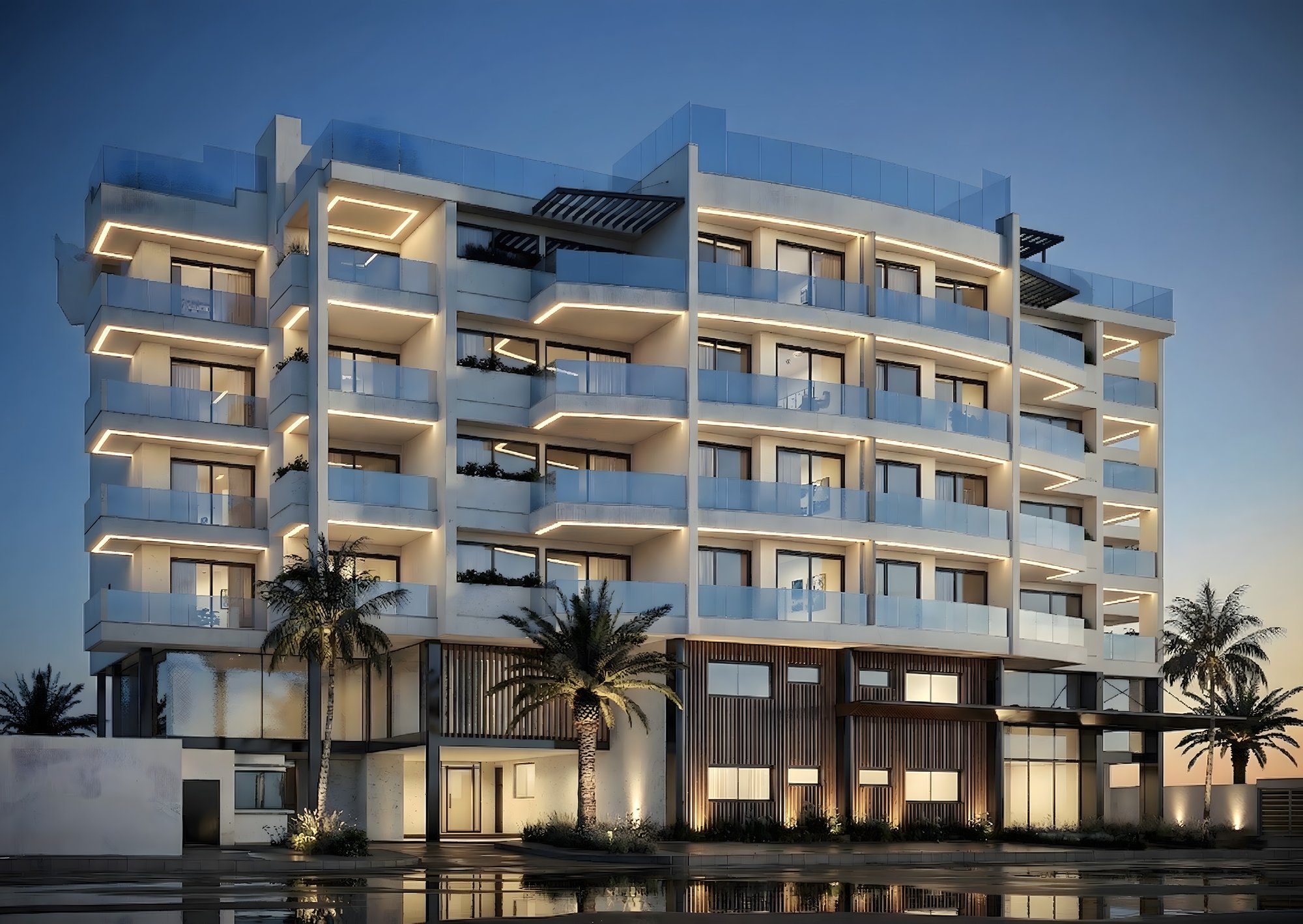
Construction at YOO Aruba runs through milestones certified by the project's architect, from the foundation to the topping-out of the five-storey structure, and each certified stage is confirmed to buyers in writing with photo and video progress reports. Buyers under contract are invited to inspect their own residence twice, at mid-construction and again before delivery, so the finished home is checked by the person who will own it and not only by the people who built it.
The developer commits in its sale and construction agreement to complete the building no later than the fourth quarter of 2027, stated as an estimate subject to force majeure, and to transfer title at the notary within sixty days of completion. Each residence is handed over finished and vacant, with a fully equipped kitchen, bathrooms and air conditioning; furniture is not part of the price, and the optional Bespoke by YOO package is a separate decision. From handover the home carries a one-year limited warranty on labour and materials and a five-year warranty on structural elements.
-
Choose a residence Pick one of the 26 residences from the current price list — one-bedrooms of 748 sq ft up to a 2,082 sq ft penthouse, all priced in US dollars from $443,000.
-
Compliance check Passport, proof of address under three months old, last tax return and a source-of-funds bank statement; a company adds its incorporation documents and its directors' passports.
-
Sale and construction agreement The developer issues the agreement, which carries its commitment to complete the building no later than Q4 2027.
-
Certified construction The architect certifies each milestone from foundation to topping out; buyers inspect at mid-construction and again before delivery.
-
Notary, transfer tax and keys Within sixty days of completion the Aruban civil-law notary conveys title free of mortgages and encumbrances, the buyer pays the two-tier transfer tax, and the warranties begin.
Is the purchase in US dollars, and does the currency matter?
Every YOO Aruba residence is priced and sold in US dollars, from $443,000 for a one-bedroom, and the optional rental program reports in USD, so a North American buyer signs and pays in the currency they already hold. Aruba's own currency is the florin, and the two do not drift apart: the Centrale Bank van Aruba has held the florin at Afl. 1.79 to the US dollar since 1986. That fixed rate is what allows the transfer-tax threshold to be quoted in dollars at all, and it means the land tax, assessed in florins, translates into a dollar figure that does not move with the exchange rate from one year to the next.
Common questions
- Do I need to be in Aruba to buy at YOO Aruba?
- No. The paperwork runs through the Aruban civil-law notary and can be handled from abroad, with the sales team coordinating each step by email and video call. A site visit in Ponton can be arranged on a trip, and buyers under contract are invited to inspect their residence at mid-construction and before delivery.
- Can I buy a YOO Aruba residence through a company?
- Yes. A company takes title in its own name; the compliance check then adds the incorporation documents and the directors' passports to the list asked of an individual. Note that a company is never a resident natural person for land-tax purposes, so it pays the flat 0.6% of assessed value whatever the status of its owners.
- Is there any tax incentive for buying a new build in Aruba?
- No. Aruba has no buyer-side incentive law and no relief for a residential purchase; the two-tier transfer tax at closing and the annual land tax are the full picture, and an Aruban tax advisor confirms how they apply in your case.
Want the details for your own situation?
Ask about availability, layouts or the buying process, and someone from the sales team will get back to you.
Get in touch