What should I know before moving to Aruba and into a YOO Aruba residence?
Moving to Aruba means arriving on an island whose currency is fixed to the US dollar, whose property market is open to foreign buyers, and whose capital, airport and beaches lie within a few miles of one another. A YOO Aruba residence in Ponton, Oranjestad, is delivered finished and vacant with a fully equipped kitchen, in five layouts from 748 to 2,082 sq ft, with furniture an optional add-on rather than something to ship. What this page does not cover — shipping, customs, schools and utility tariffs — is listed at the end instead of guessed.
What is a YOO Aruba residence delivered with?
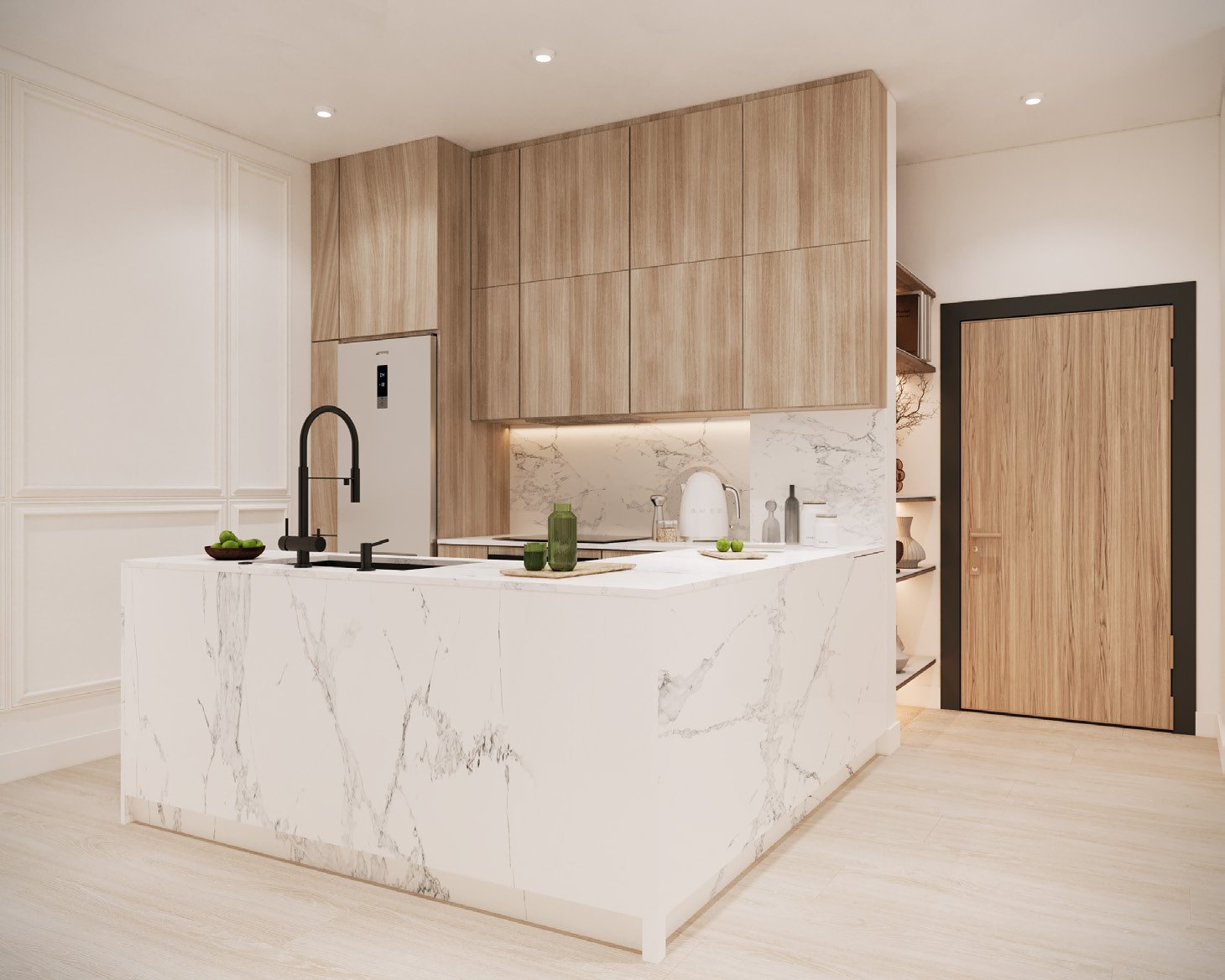
A YOO Aruba residence is handed over finished and vacant: the kitchen is fully equipped, the bathrooms are fitted, the air conditioning is installed, and the interiors are designed by YOO Studio. What is not in the price is furniture. That is stated up front rather than left for the buyer to discover, and for someone relocating it is worth reading both ways. An owner who wants to bring their own pieces has an empty, finished home to put them in; an owner who would rather not ship a container across the Caribbean can take the optional Bespoke by YOO package, which fits out the whole home in the YOO design direction and is also the furnishing standard the rental program asks for.
The home comes with a one-year limited warranty on labour and materials and a five-year warranty on structural elements, both running from handover. Because the developer commits to completing the building no later than the fourth quarter of 2027, a household planning a move should plan around that commitment rather than ahead of it, and time any shipment to arrive after the notary has transferred title, which happens within sixty days of completion.
Which sizes and layouts are there?
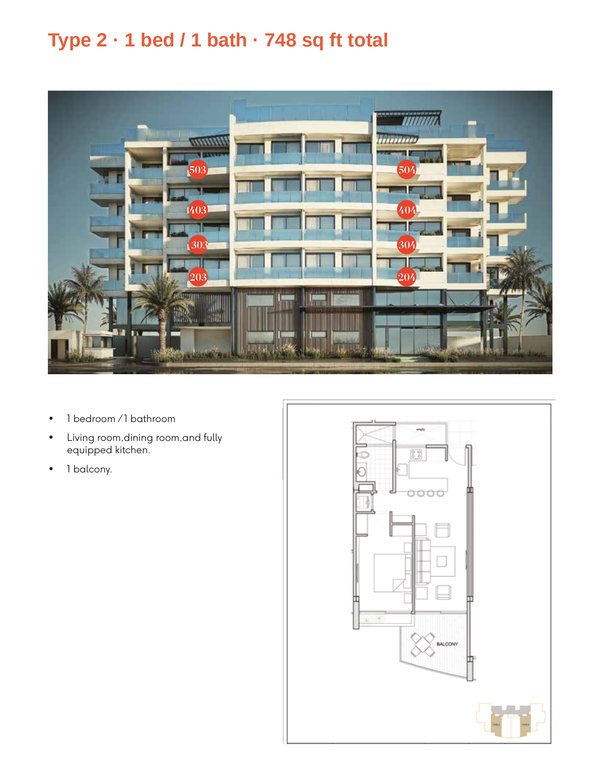
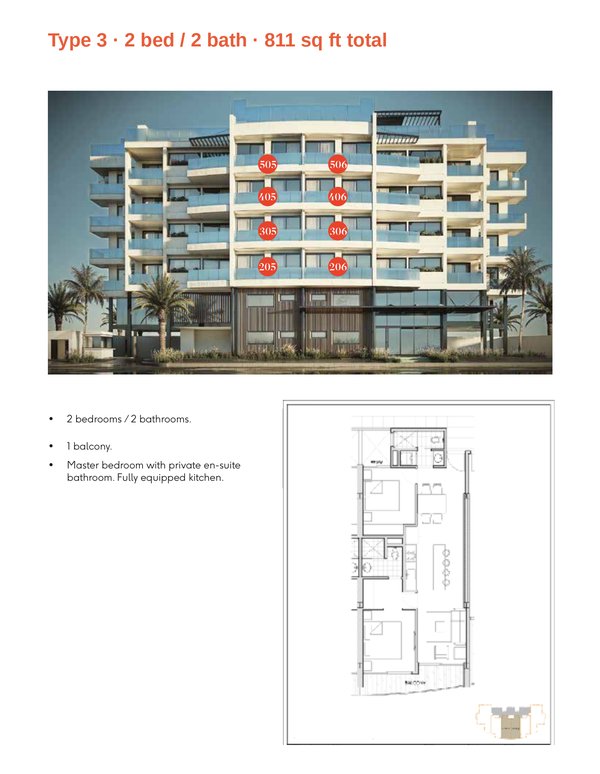
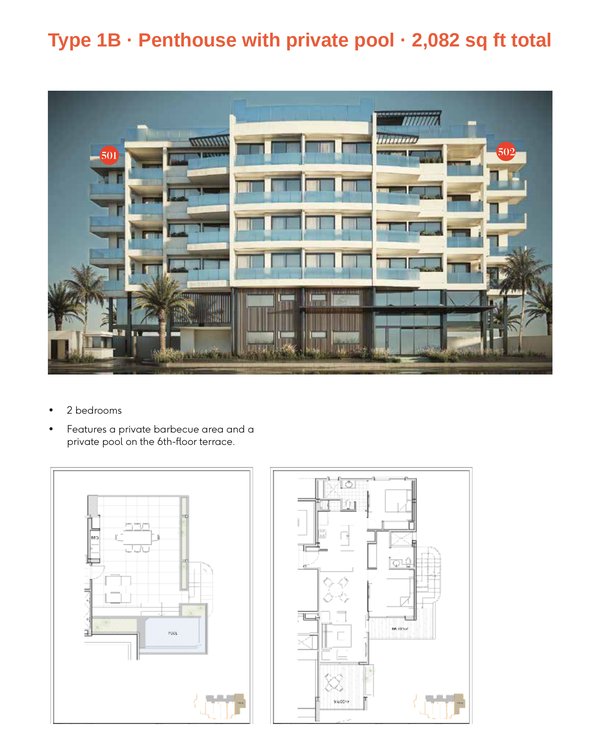
YOO Aruba holds 26 residences in five layouts across a garden level and four residential floors above it, and every size on this site is total area including balconies, exactly as the developer's price list quotes it. The smallest home is the Type 2 one-bedroom at 748 sq ft, with one bathroom; there are eight of them. The Type 3 two-bedroom, two-bathroom residence is 811 sq ft, and there are eight of those too. Six Type 1 corner residences of 1,155 sq ft face the sea from the second to the fourth level, each with two balconies. Two Type 4 duplex lofts of 1,076 sq ft open onto the garden level; both were already under contract on the developer's July 2026 price list. At the top, two Type 1B penthouses of 2,082 sq ft carry a private pool and a barbecue terrace on the sixth-floor roof.
For a household deciding what to bring, the numbers matter more than the names: a 748 sq ft one-bedroom is a different move from a 2,082 sq ft penthouse, and the table below is the place to measure a life against.
| Type | Layout | Total area | Number in the building |
|---|---|---|---|
| Type 2 | One bedroom, one bathroom | 748 sq ft | 8 |
| Type 3 | Two bedrooms, two bathrooms | 811 sq ft | 8 |
| Type 4 | Two-bedroom duplex loft on the garden level | 1,076 sq ft | 2 |
| Type 1 | Two-bedroom corner residence facing the sea, two balconies | 1,155 sq ft | 6 |
| Type 1B | Two-bedroom penthouse with private pool | 2,082 sq ft | 2 |
Where is Ponton, and what is nearby?
Ponton is a residential district of Oranjestad, the capital, and YOO Aruba's plot sits on Kukwisa within it. The move is into a neighbourhood rather than into a resort: downtown Oranjestad, with its offices, banks and shops, is about 1.3 miles away and a drive of about 5 minutes, which for anyone who will deal with a notary, a tax office or a bank is the distance that matters. Eagle Beach is about 2 miles and 6 minutes; Queen Beatrix International Airport, where nonstop flights arrive from the United States, Canada and Europe, is about 2.9 miles and 10 minutes; and the Palm Beach high-rise strip, where the island's larger hotels, restaurants and casinos cluster, is about 2.7 miles in a straight line and 12 minutes by road.
Every one of those distances is a straight-line measurement from the building's own pin, with the minutes a road estimate, so treat them as orientation and drive them yourself on a visit before you sign.
What currency will I live in?
Two currencies, and they do not move against each other. Aruba's own money is the florin, which the Centrale Bank van Aruba has held at Afl. 1.79 to the US dollar since 1986, and US dollars are the currency YOO Aruba itself is priced and sold in, from $443,000 for a one-bedroom. A household arriving with dollar income therefore faces a fixed exchange rate against the local currency, and the purchase itself involves no conversion at all.
What this page cannot tell you is what those local prices are. No cost-of-living figure, utility tariff or grocery basket is sourced behind it, so none is quoted; the peg fixes the exchange rate, not the price of electricity. For the numbers themselves, the island's utility companies and a few weeks of ordinary receipts are better guides than any developer's page.
What taxes does a newcomer pay at purchase and each year?
At purchase, the buyer pays the transfer tax, overdrachtsbelasting, in two tiers that have applied since 2023: 3% on the part of the value up to Afl. 250,000, which is roughly US$139,665 at the peg and only an approximation of a threshold set in florins, and 6% on the part above it. It is paid once, at the notary, and it is the same for a newcomer as for an islander. Aruba has no buyer-side incentive regime for a residential purchase, so there is no relief to apply for and no saving to compute.
Each year the owner pays land tax, grondbelasting, on the assessed value, which the tax office fixes for five-year periods. The rate depends on who the owner is. An owner who is not a resident natural person — a person still resident abroad, or any company — pays a flat 0.6% of the total assessed value under the law as amended in 2018. An owner who has become an Aruban resident is assessed on a progressive scale instead. So the tax a newcomer pays each year follows their status; the test that makes an individual a resident natural person for land-tax purposes is not in the material behind this page and is a question for an Aruban tax advisor, while the permit to live on the island is a separate application to DIMAS, the immigration department, on which the sales team does not advise. Whether a gain on a later sale is taxed is not settled in the material behind this page and belongs to an Aruban tax advisor.
When can I move in?
The building completes no later than the fourth quarter of 2027, a date the developer commits to in its sale and construction agreement as an estimate subject to force majeure. Between signing and that date, construction advances through milestones certified by the project's architect and reported to buyers in writing with photos and video, and a buyer under contract inspects the residence twice: at mid-construction and again before delivery. Title is transferred at the notary within sixty days of completion, and that transfer, not the completion date, is the moment a household can plan a move around.
Before contract there is one step to clear: the developer's compliance check, which asks an individual for a valid passport, a proof of address under three months old, the most recent tax return and a bank statement showing the source of funds, with incorporation documents and directors' passports added for a company.
- At contract Compliance check and agreement The buyer's documents are checked, then the sale and construction agreement is issued with its Q4 2027 completion commitment.
- During construction Certified milestones The architect certifies each stage from foundation to topping out; buyers inspect at mid-construction and before delivery.
- No later than Q4 2027 Completion The five-storey building is complete; residences are finished and vacant, with kitchens fully equipped.
- Within sixty days of completion Title at the notary The Aruban civil-law notary conveys title free of mortgages and encumbrances; the warranties begin and the keys are handed over.
Common questions
- Can I bring my own furniture to a YOO Aruba residence?
- Yes. Residences are delivered finished and vacant, so an owner may furnish them freely; the Bespoke by YOO package is optional. What this page does not cover is the customs treatment of household goods arriving in Aruba, which is a question for a freight forwarder and the Aruban customs authority.
- Do I need a residence permit to move into my residence?
- Owning the residence needs no permit, and a foreign buyer takes full title through an Aruban civil-law notary. Living in Aruba beyond a visit is a separate application to DIMAS, the immigration department; the sales team does not advise on it.
- Is the kitchen included?
- Yes. Every YOO Aruba residence is delivered with a fully equipped kitchen, fitted bathrooms and air conditioning, and carries a one-year limited warranty on labour and materials plus a five-year structural warranty.
Want the details for your own situation?
Ask about availability, layouts or the buying process, and someone from the sales team will get back to you.
Get in touch