Aruba capital gains tax, transfer tax and land tax: what a foreign owner at YOO Aruba pays
No source this page can cite settles how Aruba taxes a capital gain on a residence sold by an individual, so the honest answer is that the question goes to an Aruban tax advisor before you buy and again before you sell. What the sources do establish is the rest of the picture: a two-tier transfer tax the buyer pays, an annual land tax of 0.6% of assessed value for non-resident owners, and no buyer-side exemption regime for a residential purchase. This page sets out those rates for a buyer at YOO Aruba, priced in USD from $443,000, and states nothing it cannot source.
Does Aruba tax capital gains when I sell my residence?
The sources this page is written from do not settle it. Secondary commentary points both ways: one reading is that Aruba levies no separate capital-gains tax on an individual, another is that a gain on a property that is not the seller's primary home is taxed as income, and no primary text was located that resolves the point. This page therefore states neither position as fact. For a buyer at YOO Aruba the practical instruction is simple: ask an Aruban tax advisor, in writing, how a future sale of the specific residence would be treated for someone in your residency position, and ask again before the sale, because the rules in force at a purchase in 2026 and at a delivery in Q4 2027 may not be the rules in force at a resale years later.
That hedge is the answer, not a gap in it. A page that told you Aruba has no capital-gains tax would be repeating one side of a disagreement as if it were law, and a reader who sold on the strength of it could be wrong on the exact case the page was published against.
What is the transfer tax when I buy in Aruba, and who pays it?
The buyer pays it. Aruba's transfer tax, the overdrachtsbelasting, is charged in two tiers: 3% on the portion of the value up to and including Afl. 250,000, and 6% on the portion above that. The threshold is set in Aruban florins; at the fixed rate of Afl. 1.79 to the US dollar it is roughly US$139,665, an approximation for readers, since the statute speaks in florins. The tiers took effect on 1 January 2023 under the Departamento di Impuesto's 2023 tax plan. A transfer by inheritance is not charged the tax.
Do not multiply these rates against a YOO Aruba price on this page's authority. Every residence is priced and sold in US dollars, from $443,000, while the tax is assessed in florins; the amount actually due is fixed at closing, and the figure to rely on is the one the notary executing the transfer and the Departamento di Impuesto put in writing, not a calculation from a web page. On what value it is assessed, and who remits it, is confirmed at the notary for the specific purchase.
| Portion of the value | Rate |
|---|---|
| Up to and including Afl. 250,000 (about US$139,665) | 3% |
| Above Afl. 250,000 | 6% |
| Transfer by inheritance | Not charged |
What is the annual land tax, and does it differ for non-residents?
Yes, and the difference is the rate structure rather than the tax. Aruba's land tax, the grondbelasting, is levied every year on the assessed value of the property. For every taxpayer who is not a resident natural person, meaning non-resident individuals and all legal entities whether resident or not, the rate is 0.6% of the assessed value in full. Resident individuals instead pay a progressive scale that starts at 0% on value up to Afl. 120,000 and reaches a top rate of 0.60% from Afl. 750,000 upward. The scale comes from the 2018 amendment to the land-tax ordinance, AB 2018 no. 81, gazetted in December 2018 and in force from 2019; the ordinance it amends dates from 1995. Assessed values are set for five-year periods.
Two consequences follow for a foreign buyer at YOO Aruba. First, a non-resident owner's rate is flat, not progressive, so the 0.6% applies to the whole assessed value rather than to bands. Second, the rate is not permanent: a foreign buyer who later becomes an Aruban resident moves onto the progressive scale. This page does not apply the rate to any YOO Aruba price, because the assessed value is the tax authority's figure, revised on its five-year cycle, and not a number this page can state.
| Taxpayer | Rate |
|---|---|
| Non-resident individuals | 0.6% of assessed value |
| Legal entities, resident or not | 0.6% of assessed value |
| Resident natural persons | Progressive: 0% on value up to Afl. 120,000, rising to a top rate of 0.60% from Afl. 750,000 |
Is there a buyer-side tax exemption for a residence in Aruba?
Not in any source this page can cite. Aruba has no buyer-side exemption regime for a residential purchase: the transfer tax above is paid in full by the buyer, and the land tax is charged every year at the rates above. The investment incentives Aruba does operate are addressed to companies and to qualifying redevelopment projects, not to an individual buying a residence, and a YOO Aruba buyer should not assume any of them applies to a home. A listing that promises an Aruban condo a tax holiday is describing something no source this page can cite provides for.
The consequence for a buyer is clarity rather than a cost. Every tax above is stated at its rate and its basis, and nothing in the sources this page cites offers a way to reduce them. What remains uncertain is the capital-gains question at the top of this page, and that goes to an advisor.
In which currency are these taxes assessed, and does the peg matter?
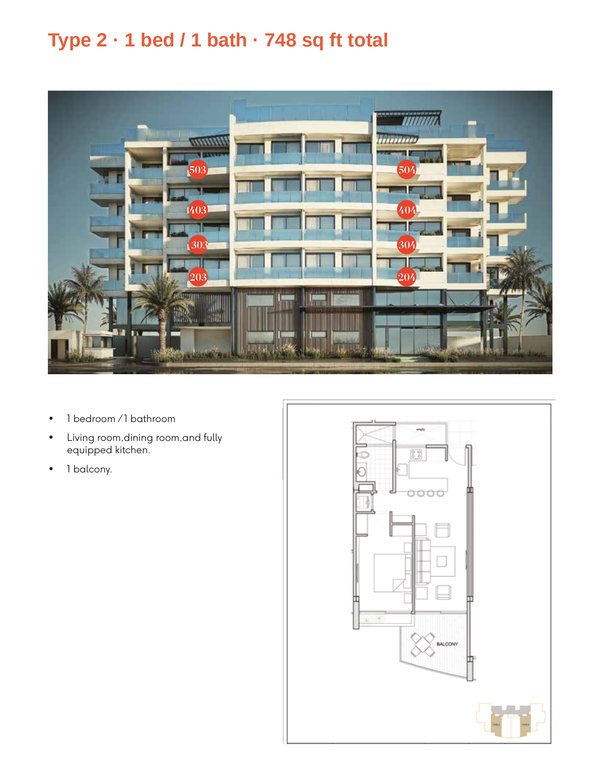
The taxes are assessed in Aruban florins. The florin has been fixed at Afl. 1.79 to the US dollar since 1986, which is why the transfer-tax threshold of Afl. 250,000 can be quoted as roughly US$139,665 without the figure moving from year to year. YOO Aruba itself is priced and sold in US dollars, from $443,000 for a Type 2 one-bedroom of 748 sq ft, and the optional rental program run by Mastermind Hospitality Group reports in US dollars. A buyer therefore pays the price in dollars and is assessed in florins for the transfer tax at the transfer of title and for the land tax each year; the peg keeps the dollar equivalent of the florin figures stable, but this page still leaves the arithmetic to the notary and the tax authority.
What should a foreign buyer at YOO Aruba ask an Aruban tax advisor before signing?
Four questions cover the gaps this page leaves open. How a future sale of the residence would be taxed for someone in your residency position, since the sources here do not settle it. Whether you will hold as an individual or through a company, because a company pays the flat 0.6% land tax regardless of where it is resident. Whether you expect to become an Aruban resident, because that moves an individual from the flat rate onto the progressive scale. And how income from the optional rental program would be taxed in Aruba and in your home country, which is outside this page entirely and depends on your own position.
Ask for the answers in writing. YOO Aruba delivers in Q4 2027, so the rules in force at closing may not be the ones in force today, and the version that matters is the one your advisor confirms at the time.
Common questions
- Does Aruba have a capital gains tax on property?
- This page cannot say: the sources it can cite do not settle how Aruba taxes an individual's gain on a residence, and secondary commentary disagrees. Ask an Aruban tax advisor for the treatment of your specific case before you buy and before you sell.
- Who pays the transfer tax in Aruba?
- The buyer. The rate is 3% on the part of the value up to and including Afl. 250,000, and 6% on the part above it, in force since January 2023. A transfer by inheritance is not charged.
- Do non-residents pay more land tax in Aruba?
- Non-resident individuals and all legal entities pay a flat 0.6% of assessed value; resident individuals pay a progressive scale from 0% to 0.60% under the 2018 amendment in force from 2019. A foreign owner who becomes resident moves onto the progressive scale.
Want the details for your own situation?
Ask about availability, layouts or the buying process, and someone from the sales team will get back to you.
Get in touch