How to buy property in Aruba from abroad: following the money from your bank to the deed
The legal route to owning Aruban property is short to describe: a purchase in writing, a notarial deed, and registration in the public register. What catches foreign buyers is the money that has to travel alongside it — across a border, into a florin economy, past the checks Aruba's law places on large sums, and sometimes through a local lender. This page follows that money in the order it moves. We are building 26 residences in Ponton, Oranjestad, priced in US dollars, so the last section says where a purchase here sits; everything before it applies to any property on the island.
Why the money has its own route
In Aruba, property changes hands on paper. The civil code wants the purchase in writing, and ownership passes when a civil-law notary's deed is entered in the public register. Our other guides walk through that paper — the two ways land is held, the three-day window a private buyer of a home enjoys, the deed and the language it is signed in, the taxes. None of it changes because you live abroad: no statutory restriction on foreign ownership of Aruban real estate was found, and a buyer from the United States, Canada or Europe signs the same deed an islander does.
What does change is the money. Yours starts in another country, often in another currency, and arrives in an economy whose florin has been fixed at 1.79 to the US dollar since 1986. Aruba's law watches that journey at three points: who you are and where the funds come from, whether money crossing the border is licensed, and what it costs when money leaves again. A fourth point applies only if you borrow on the island. Each is easier to handle if you know about it before you wire anything.
First checkpoint: the notary checks you, and possibly your money
An Aruban civil-law notary is not only the officer who draws the deed. Under the island's anti-money-laundering ordinance a notary is a designated service provider and must carry out client due diligence: identify you and verify that identity, identify the person who ultimately owns or controls a buying company, and — where the transaction calls for it — inquire into the source of the wealth and of the funds involved. A transaction the notary regards as unusual must be reported without delay to FIU-Aruba, the island's financial intelligence unit. A business that deals in or brokers real estate falls under the same ordinance, and its checks reach the other side of the deal as well.
For a foreign buyer the practical consequence is timing. A notary cannot pass a deed for a client it has not been able to identify, and a buyer who arrives with a company three layers deep, or funds with no explanation behind them, will find the file stops long before the price is discussed again. Ask the notary early which identity documents and which evidence of the origin of your funds it wants, and have them ready while the register searches are still running. The ordinance sets the duty; each office sets its own list.
Second checkpoint: money crossing into Aruba
Aruba runs a foreign-exchange regime. The Centrale Bank van Aruba regulates payments between the island and abroad under the Landsverordening deviezenverkeer, largely by granting licences for capital transactions, and buying or selling real estate across the border is one of them. Since 1 January 2024 the central bank has issued a general foreign exchange licence covering the purchase and sale of real estate, so an ordinary sale between an Aruban party and a buyer abroad no longer calls for an individual licence application.
The deal is still reported. Where a purchase or sale between a resident and a non-resident is settled outside the local foreign-exchange banks, the notary's office files a declaration with the central bank — naming buyer and seller, marking each as resident or non-resident, and stating the amount in foreign currency and in florins — within 15 days of the transfer deed being passed. None of that is yours to file, but it explains why the notary will ask about your residence status and how the money will be paid, and why your answer should be given in writing.
Third checkpoint: the 1.3% that runs one way
Aruba charges a foreign exchange commission of 1.3% on payments made abroad — but it is a charge on residents, levied by the central bank for the government, on money leaving the island and on deposits into non-resident accounts at local banks. Money arriving is not what it reaches. A buyer wiring US dollars in from a bank at home is not making a resident's payment abroad.
It becomes relevant in two other places. On a real-estate deal between a resident and a non-resident settled outside the local banks, the notary's declaration computes the commission on the florin value of the transaction and remits it where the deal leads to a payment abroad within the ordinance's scope. And the ordinance carries a rule written for people in a foreign owner's position: a non-resident who pays abroad in florins is treated as a resident and owes the commission, unless they can show the florins were bought with foreign currency. So keep the paper trail of every conversion, and when you one day sell, ask the notary before the deed how the proceeds will reach you and whether the commission falls on that payment.
The fourth checkpoint, if you borrow: how an Aruban mortgage is made
Borrowing against Aruban property is a transaction of its own, with a deed of its own. The civil code creates a mortgage only by a notarial deed between borrower and lender, followed by registration in the public registers. That deed must identify the debt it secures and the amount, or maximum amount, recoverable under it, and the lender must elect a domicile in Aruba. Unless the parties agree otherwise, the costs of granting and creating the mortgage fall on the borrower.
One rule catches buyers who plan to sign from home. For the transfer deed, the code requires only that an attorney's authority be stated precisely in the deed. For the mortgage deed it goes further: someone may act for the borrower only under a power of attorney granted by authentic deed — in practice, one drawn up by a notary. If you intend to be absent on the day, find out from both the notary and the lender, well in advance, what form that power must take in the country where you will sign it.
Local lending to non-residents does exist. One Aruban commercial bank publishes a mortgage for non-residents buying a house or a condo, and lists what it asks for: a passport, proof of income, an employer's letter, proof of address, the purchase agreement, an appraisal by a recognised Aruban appraiser no older than 6 months, a credit report where one is available, and a declaration of the source of wealth. That is one lender's list rather than a rule of the market, and this page quotes no lending terms. For a residence that is not yet built, ask any lender at the outset whether, and from what point, it will lend against it.
On the day of the deed: what the notary holds back
The money's last stop before the register is the notary's table. Aruba's transfer tax is the buyer's to pay, and the notary withholds and remits it: 3% on the part of the value up to and including Afl. 250,000 — about US$139,665 at the fixed rate — and 6% on the part above it, charged on the higher of the purchase price or the value the tax office has registered. Because the law writes its threshold in florins while your purchase may be priced in dollars, the figure that counts is the one the notary sets out in writing before the signing, not one worked out from a web page.
The signing is also where the other checkpoints meet. Due diligence has to be complete, both parties' residence status settled for the central bank's declaration, and, if you borrow, the mortgage deed agreed with your lender. A buyer who has dealt with each in advance arrives at the table with nothing left to decide.
Where a purchase at YOO Aruba sits
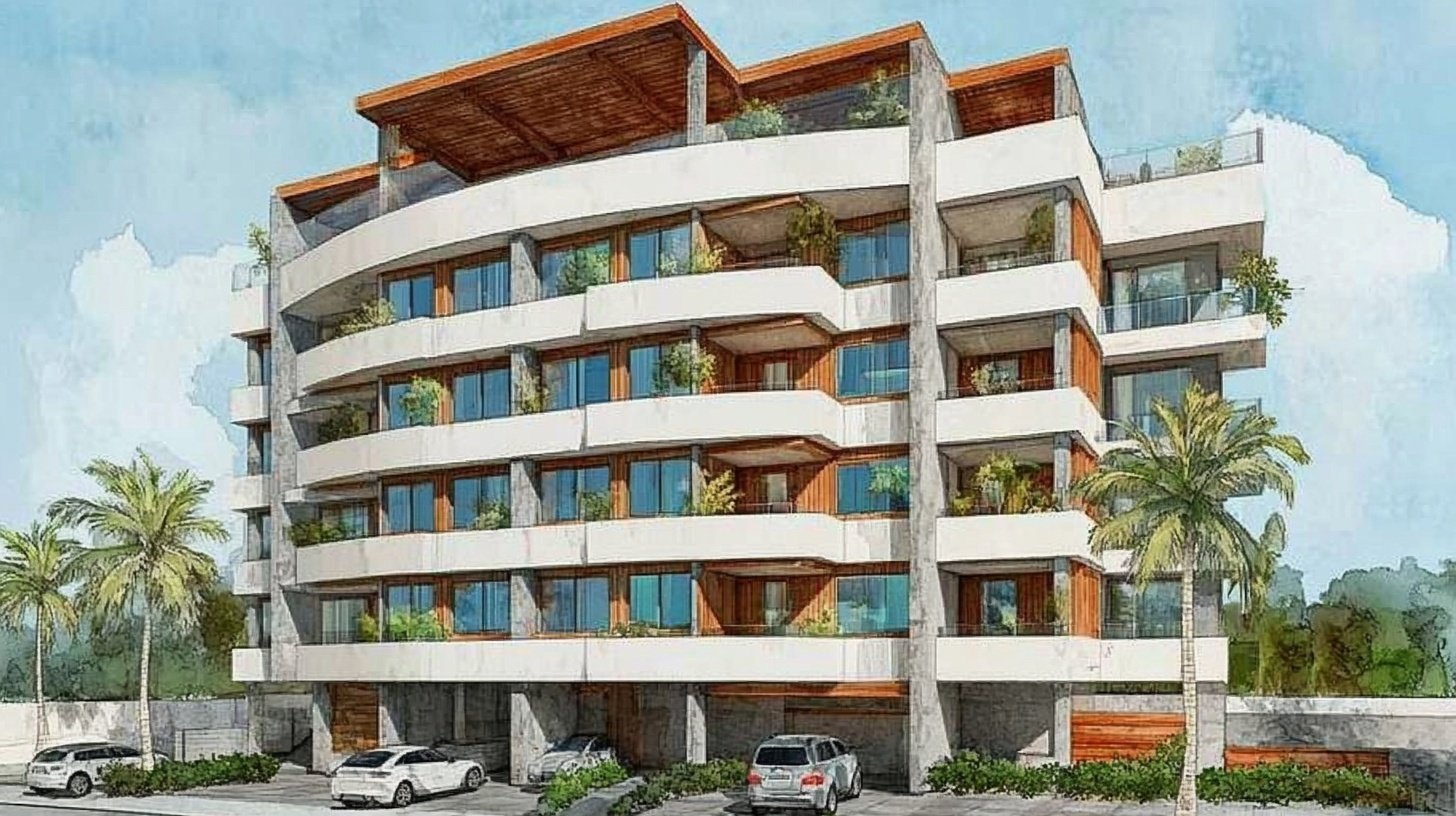
YOO Aruba is a building of 26 residences in Ponton, Oranjestad, priced in US dollars from $443,000, with completion set for Q4 2027. A foreign buyer here meets every checkpoint above: the notary who passes the deed identifies you and asks about your funds, the transfer tax is withheld at the table, and a buyer who borrows signs a separate mortgage deed with a lender of their own choosing. Because the price is in dollars, your money need not change currency to pay for the residence, although the transfer tax is still computed in florins.
Owning a residence here does not by itself give you the right to live in Aruba; that is a separate application, set out in our guide to the residence permit. If you would like to know which residences are available now, ask us.
Common questions
- Can a foreigner buy property in Aruba?
- Yes. No statutory restriction on foreign ownership of Aruban real estate was found, and a buyer who lives abroad takes title through the same notarial deed and registration as an islander. Owning property does not, on its own, give a right to live on the island.
- Do I need a licence from the central bank to buy property in Aruba?
- Not an individual one. Since 1 January 2024 a general foreign exchange licence from the Centrale Bank van Aruba has covered the purchase and sale of real estate. Where a deal between a resident and a non-resident is settled outside the local banks, the notary reports it to the central bank within 15 days of the deed.
- Does Aruba charge a fee on money I send in to buy?
- The 1.3% foreign exchange commission is a charge on residents' payments abroad, not on incoming funds. A non-resident who pays abroad in florins is treated as a resident for it unless the florins were bought with foreign currency, so keep a record of each conversion.
- Can a non-resident get a mortgage in Aruba?
- At least one local bank publishes a mortgage for non-residents, asking for identity, income and address documents, the purchase agreement, an appraisal no older than 6 months and a declaration of the source of wealth. The mortgage itself is created by a notarial deed and registered, and anyone signing it for you needs a power of attorney made before a notary.
Want the details for your own situation?
Ask about availability, layouts or the buying process, and someone from the sales team will get back to you.
Get in touch