Property in Aruba: where a building is allowed to stand, and what the island asks of it
Most pages about property in Aruba open with a price or a tax rate. This one opens earlier, with the ground. Aruba is a small island, one side of it carries very nearly all of its buildings, and a new building there is not bought into existence so much as permitted into it — then made to survive a wind that never really stops. We are building twenty-six residences on two plots in Ponton, Oranjestad, so this page is written from the side of the table where those constraints are a schedule rather than a subject.
Why nearly all of Aruba's property sits on one coast
Aruba has two coasts and they are not interchangeable. The southwest, leeward side lies in the island's own wind shadow: the water is calm, the beaches are broad and sandy, and the towns, the marinas and the hotel strip all line it. The northeast, windward side takes the trade wind head-on — limestone cliff, heavy surf, coves where swimming is advised against — and a large share of it is national park rather than building land.
So the honest description of this market is not an island but a strip, and the strip is short. From our plots in Ponton, a residential district of the capital, downtown Oranjestad is roughly 1.3 miles and about 5 minutes by road; Eagle Beach is roughly 2 miles and 6 minutes; the Palm Beach hotel strip is roughly 2.7 miles and 12 minutes. Choosing where to own here is therefore far less a question of travel time than of which character you want outside the door — a working town, a low-rise beach, or a resort frontage. Anywhere on that strip, the rest of it is a short drive away.
Adding a building here is a permission, not a purchase
Supply grows slowly on Aruba, and the reason is procedural rather than commercial. A new building needs a building permit from the Department of Public Works, and the requirements begin with the plot before they ever reach the design: it has to be property land or commercial long-lease land, it has to front a road, and it has to provide parking. The application is a file rather than a form — architectural plans, a site plan, construction drawings and calculations, the notarial deed or ministerial decree establishing the applicant's right to the land, and the technical inspection paperwork.
Above that sits the island's spatial development plan, the Ruimtelijk Ontwikkelingsplan adopted in 2019, which sets policy for how Aruba's land and coastal waters may be developed; the version carrying regulations lays down binding rules on the destination, building and use of specific areas. A use the plan does not contemplate for a parcel is not something a buyer and a seller can settle between themselves. That is why new residential buildings appear here in small numbers, and why a pre-construction project is a datable event rather than a listing that materialises one morning.
Ours is two plots — 4585 and 4586 in Kukwisa, Ponton — carrying twenty-six residences over a garden level and four upper residential floors, on an eighteen-month construction programme with completion stated as Q4 2027.
What a wind that never stops asks of a building
The trade wind that roughens the north coast crosses the whole island, all year, and it carries salt. On a building that shows up long before anything structural does: on balustrades and railings, on window and door hardware, on air-conditioning condensers, on light fittings, on anything bolted to an exposed facade. It is why specification on a coastal island is an upkeep decision as much as an aesthetic one, and why the question who looks after the exterior, and out of whose budget is worth asking about any Aruban property before the finishes are discussed.
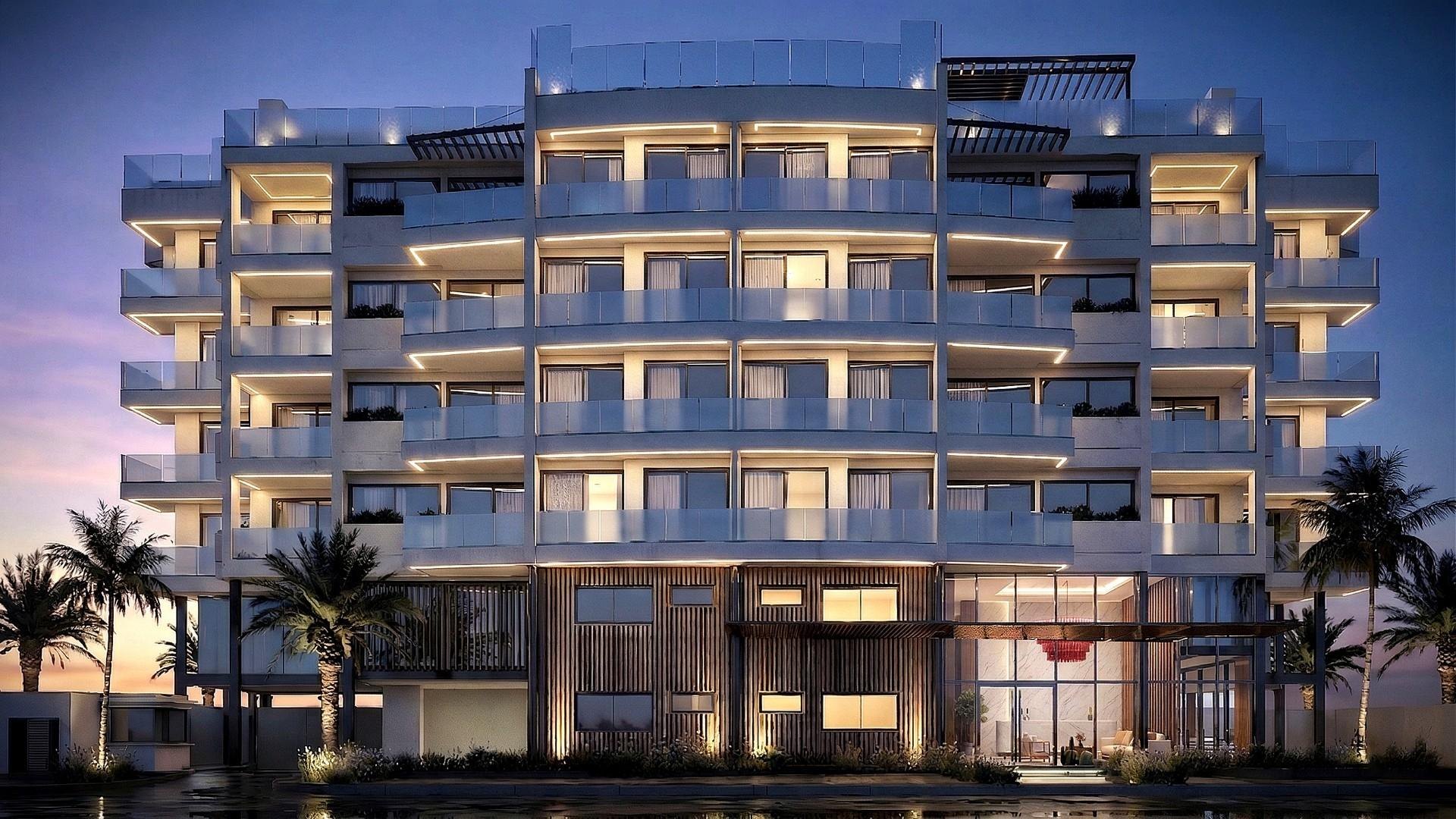
In an apartment building the answer is normally the owners' association rather than any single owner, which makes the exterior envelope a shared recurring cost instead of a personal surprise. A building shaped like ours — continuous balcony bands on every residential level, a pool deck on the roof — puts a great deal of surface into that shared envelope, so it is worth understanding what the association is expected to carry before you own a share of it. The ground is the other half of the same picture: this is arid limestone and scrub, not topsoil, and planting that survives here is drought-adapted by necessity rather than by taste.
Water, on an island with no rivers
Aruba has no rivers and no natural fresh surface water worth the name. Its mains water is manufactured: the island's water and energy utility desalinates seawater, treats it and puts it into the network, and that is what reaches a tap in Oranjestad. For a buyer used to a mainland market this quietly deletes a whole category of due diligence — there is no well to test, no borehole to share with a neighbour, no water right to trace through the deed.
What it puts back is a utility relationship and a running cost. Water is a metered household bill, and a line in the association's budget for common areas, landscaping and anything holding a pool. It is also the reason an arid island can carry rooftop pools and planted terraces at all, and the reason irrigation on a well-run property is drip rather than spray. This page quotes no tariff, because none is sourced in the material behind it; ask instead for the building's expected common-area water and electricity budget in writing, rather than accepting a spoken estimate.
Outside the main hurricane belt, which is not the same as calm
Aruba sits at roughly 12.5 degrees north, below the track most Atlantic systems take, and it is outside the main Atlantic hurricane belt. It is worth being precise about what that does and does not mean. It does not mean the island is never affected: storms passing to the north have brought swell and rain, and no page here will call Aruba hurricane-free. It means the risk profile is different from the northern Caribbean rather than absent, and that the everyday load on a building is the constant salt-bearing wind rather than a once-a-decade event.
For a buyer, the part that is actually verifiable is not the weather but the construction. A new build is designed, permitted and inspected under current rules, and it hands over with a warranty attached: ours carries a one-year warranty on labour and materials and a five-year warranty on structural elements. An older finished property offers no equivalent, which is why on an island like this the exterior envelope — not the kitchen — is the thing to have surveyed before committing.
What to ask about any Aruban property, and what this page will not claim
This page publishes no island-wide supply figure, no average price per square foot and no permit timeline, because nothing in the material behind this site sources them. What it can hand you is the question list the island's own conditions generate, which is not the list a mainland checklist produces: what the spatial plan permits on that parcel; whether a permit is in hand and what it actually covers; who looks after the exterior envelope and out of which budget; what the association assumes for water, electricity and the common areas; and, on any resale, the state of the metalwork and the glazing seals after some years of salt air.
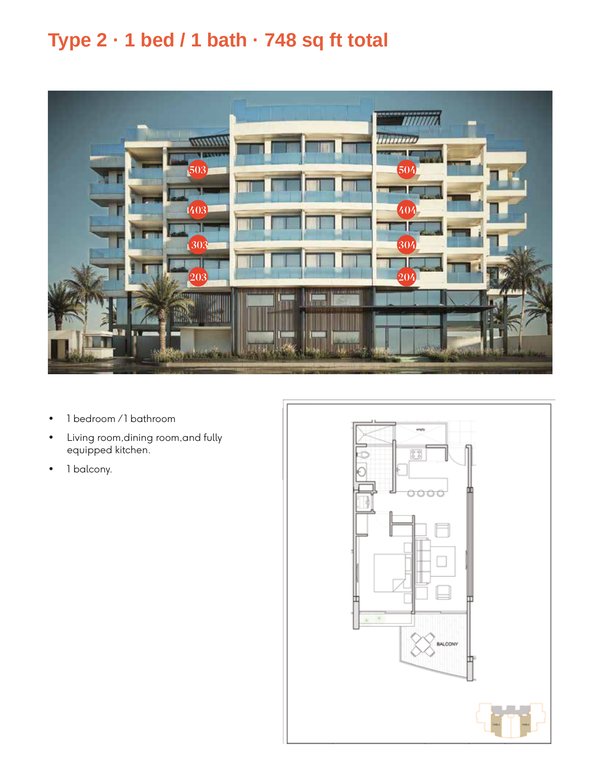
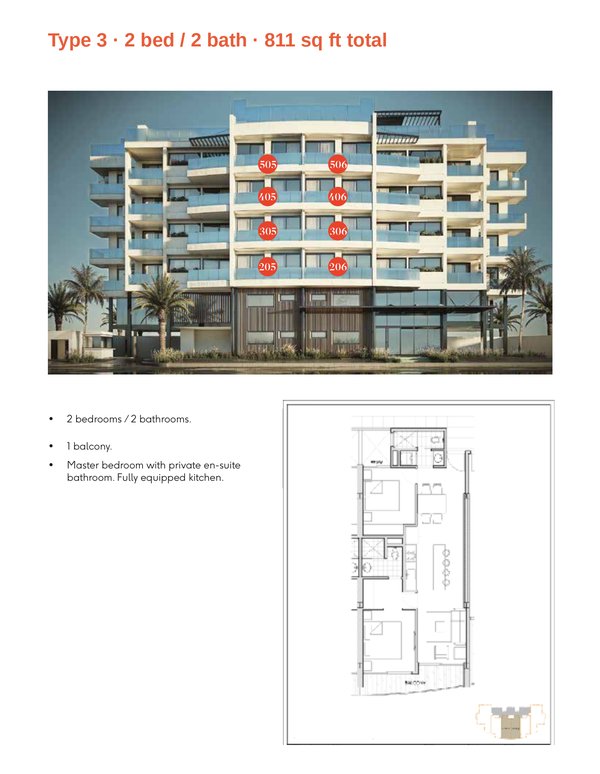
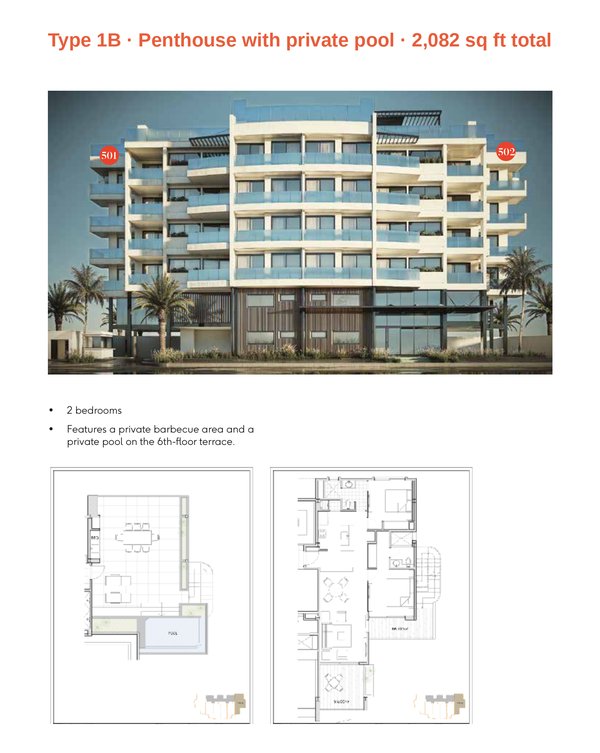
Where ours sits in that picture, plainly. Twenty-six residences, of which twenty-five are for sale; five layouts running from 748 to 2,082 sq ft, quoted as total area including balconies; priced from $443,000 in US dollars on the developer's July price list; completion stated as Q4 2027. Availability moves, so treat any count you read anywhere as a snapshot and ask the team what is genuinely open. Which form of tenure plots 4585 and 4586 are held under — property land or long lease — is a question for the deed and for your own notary, and this page does not state it, because the fact base behind it does not.
Common questions
- Can a foreigner buy property in Aruba, and build on it?
- Ownership in Aruba is not restricted by nationality, so a foreign buyer may hold property in their own name. Building on it is a separate permission: a building permit from the Department of Public Works, on a plot that is property land or commercial long-lease land, fronting a road and providing parking, for a use the island's spatial development plan allows. Buying a residence in an already-permitted building means the developer has taken that step.
- Why is nearly all Aruban property on the west side of the island?
- Because the leeward southwest lies in the island's own wind shadow: calm water, sandy beaches, and the towns and hotel strip strung along it. The windward northeast takes the trade wind directly, with limestone cliff and rough surf, and much of it is national park rather than building land. The buildable strip is short — from Ponton, downtown Oranjestad is about 1.3 miles and the Palm Beach strip about 2.7 miles.
- Does property in Aruba have to be built for hurricanes?
- Aruba lies at roughly 12.5 degrees north, outside the main Atlantic hurricane belt. That is not immunity: systems tracking north of the island have brought swell and rain, and this page will not call Aruba hurricane-free. The load a building here carries every single day is the salt-bearing trade wind, and that is what the exterior specification and the upkeep budget are really answering.
- Where does the water in an Aruban property come from?
- From the mains, and the mains come from the sea. Aruba has no rivers, so the island's water and energy utility produces drinking water by desalinating seawater and treating it. There is no well or borehole to inspect when you buy here; what matters instead is the metered household bill and what the owners' association assumes for common-area water, landscaping and the pool.
Want the details for your own situation?
Ask about availability, layouts or the buying process, and someone from the sales team will get back to you.
Get in touch