Cost of living in Aruba vs the US: what costs more, what costs less, and what it means for a YOO Aruba owner
Across everything a household buys, Aruba is not dearer than the United States: the World Bank's 2021 price comparison put Aruban household prices at about 84% of the US level. That average hides the split a US buyer at YOO Aruba will actually feel. In the same comparison, food and drink cost about 49% more than in the US, while health care and housing came in near half the US level; today, premium gasoline costs about $6.17 a gallon and the first block of household electricity is priced close to the US average. Every figure on this page is in US dollars at the florin's fixed rate of 1.79, with its source and its date.
Is Aruba more expensive than the US?
Not on average, and the average is the least useful number on this page. The World Bank's International Comparison Program prices a matched basket of goods and services in every economy it covers, and its 2021 round, published in 2024 and still the latest with a breakdown by category, put the price level of everything Aruban households buy at about 84 on a scale where the United States is 100. Leave housing out and the figure rises to about 96, close to par.
The categories are where the comparison earns its keep. Food and non-alcoholic drinks stood at about 149, so a basket that cost $100 in the US cost about $149 in Aruba; alcohol and tobacco stood at about 147. At the other end, housing together with its water, power and fuel came to about 50, and health care to about 54. An owner at YOO Aruba pays no rent, so the cheapest part of that average does little for the household, while the dearest part, the grocery bill, comes round every week of a stay. The table sets out each category; all of it describes 2021 prices, and the sections below bring each line up to date where an official source allows.
| Category | Aruba (US = 100) |
|---|---|
| Food and non-alcoholic drinks | 149 |
| Alcoholic drinks and tobacco | 147 |
| Transport services | 118 |
| Vehicle purchases | 103 |
| Furnishings and household equipment | 100 |
| Transport, all | 99 |
| Clothing and footwear | 94 |
| Recreation and culture | 92 |
| Communication | 83 |
| Restaurants and hotels | 73 |
| Health | 54 |
| Housing, water, electricity and fuels | 50 |
| All household spending | 84 |
| All household spending, without housing | 96 |
Why do groceries cost more, and what can the kitchen change?
Part of the gap is written into the tax system. Since 1 August 2023, Aruba's customs department has collected the island's 7% turnover taxes on goods as they are imported, together with import duties, and a shop also owes turnover tax on its own sales. Grocery prices have been rising faster than in the US as well: the statistics bureau's food-at-home index rose 3.8% in the 12 months to August 2026, against 2.2% for the same index in the US.
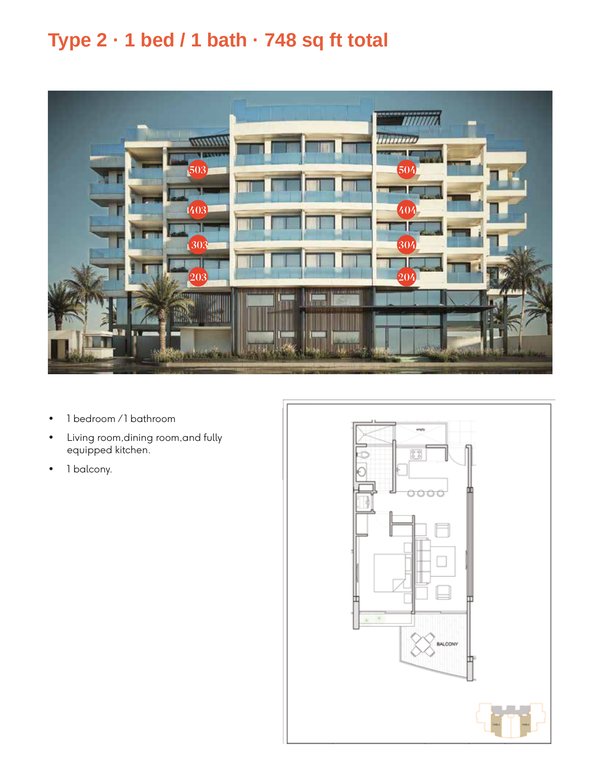
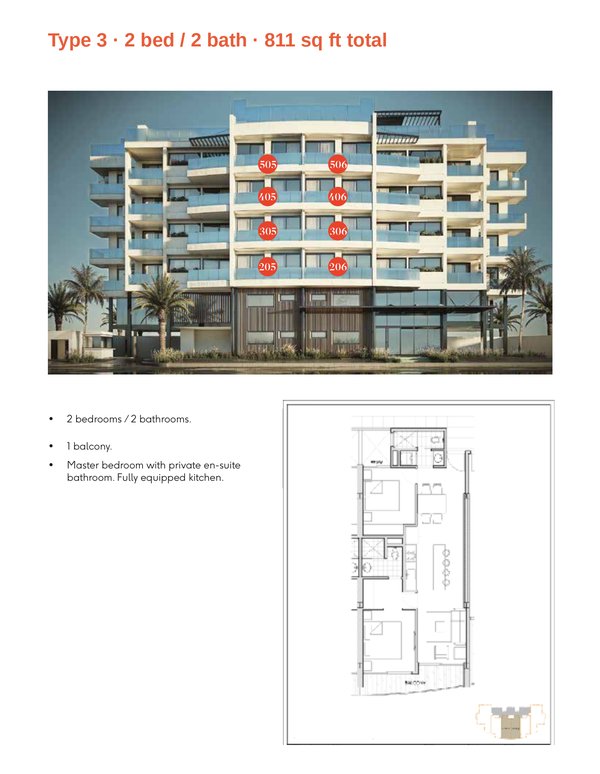
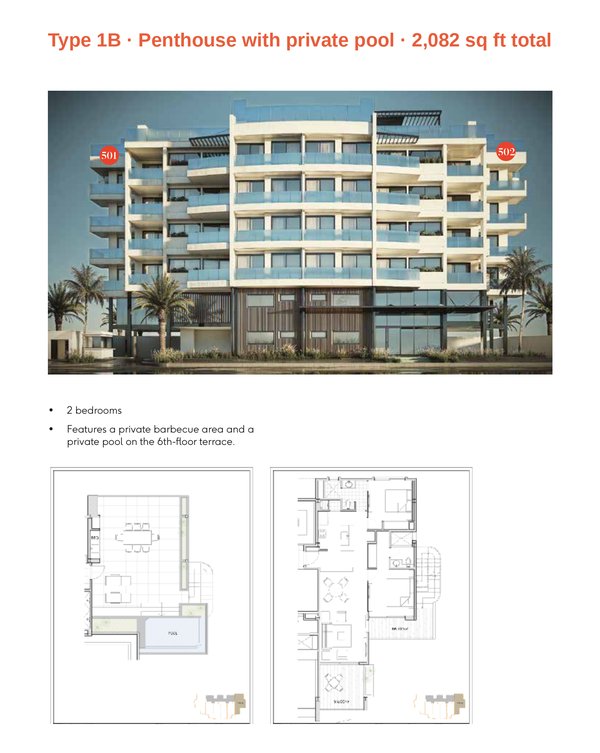
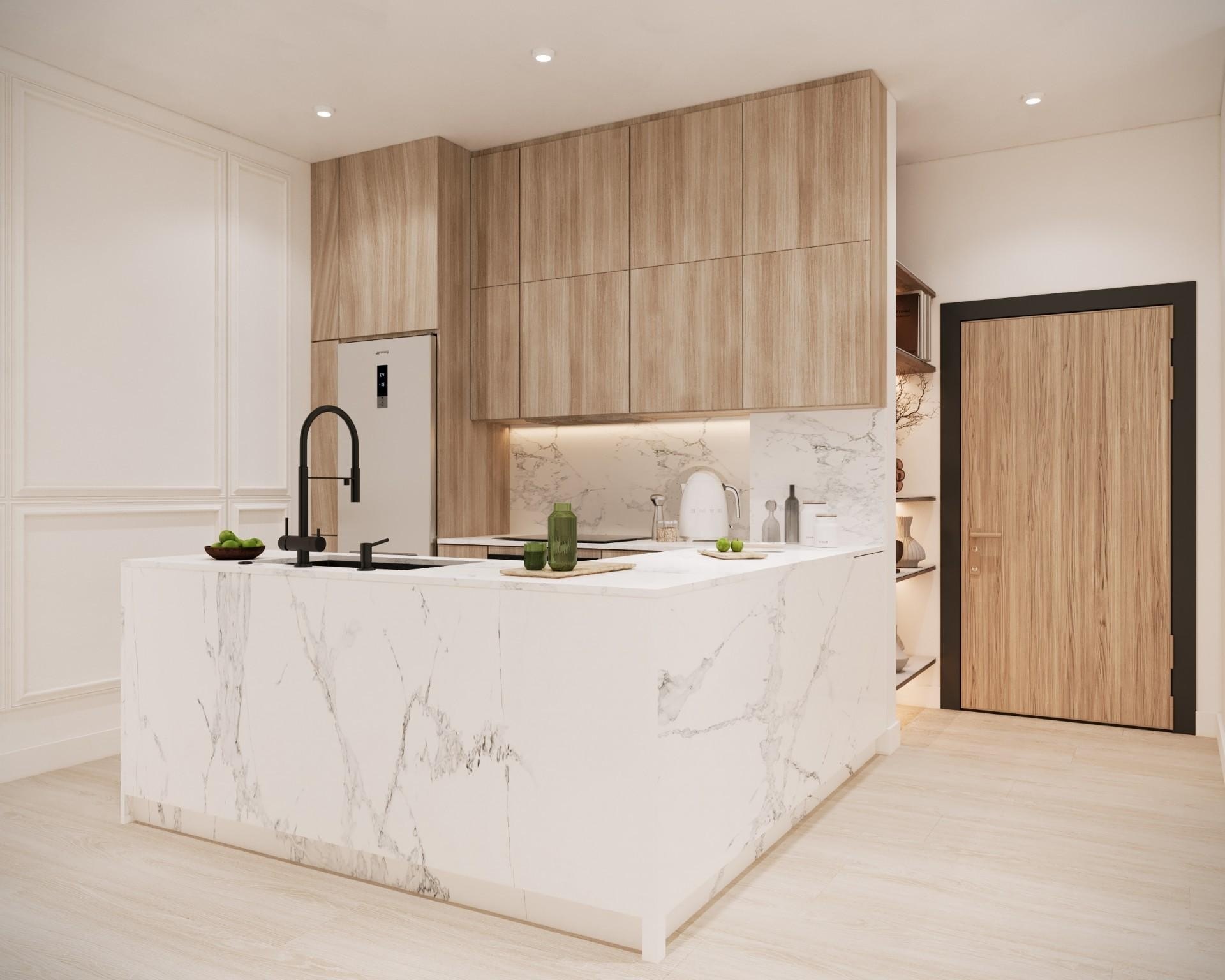
The kitchen is where an owner can push back. Every YOO Aruba residence, from the 748 sq ft one-bedroom to the 2,082 sq ft penthouse, is delivered with a fully equipped kitchen, so cooking in is always an option. The bureau's own figures hint at how to use it: over the same 12 months, fish and other seafood was the only food group to get cheaper, falling 3.6%, while fruit rose 10.8%. Those are price movements rather than price levels, so they show what got relatively cheaper, not what is cheap.
What do electricity and water cost next to a US home?
Per unit, slightly above the US average for a moderate user, and well above it for a heavy one. The electricity distributor's residential tariff, in force since the November 2024 bill month, charges a fixed Afl. 12.50 a month, about $7, then Afl. 0.3431 per kilowatt-hour for the first 500 kWh, about 19.2 US cents; Afl. 0.3531 for the next 500, about 19.7 cents; and Afl. 0.4645 above 1,000 kWh, about 25.9 cents. The US Energy Information Administration put the average US residential price at 18.31 cents per kWh in July 2026. Aruba's electricity index did not move in the 12 months to August 2026, while the US index rose 3.8%, and the tax office lists the supply of water and electricity among the exemptions from its turnover taxes.
Because the rate climbs with use, consumption decides the bill, and every YOO Aruba residence is delivered with air conditioning. No measured consumption exists yet for any layout, so this page quotes rates rather than a monthly bill. Water is tiered more steeply. On the water utility's residential rates as published, converted to dollars and gallons, the first 1,585 gallons or so in a month cost about $12.16 per 1,000 gallons, use up to about 3,170 gallons $16.71, up to about 5,283 gallons $30.03, and anything beyond that $40.60 per 1,000 gallons. The utility's own worked example, about 3,963 gallons in a month, comes to Afl. 124.50, about $69.55.
Gasoline, cars and getting around
Fuel is where Aruba clearly costs more. Pump prices are set by the government, and since 9 September 2026 premium unleaded, the gasoline grade on the official price notice, has cost the equivalent of about $6.17 a US gallon, with the turnover taxes included. The Energy Information Administration's US averages for the week of 5 October 2026 were $4.35 a gallon for regular and $5.40 for premium. Over the year to August 2026, gasoline rose by almost the same share in both places, 27.1% in Aruba and 27.4% in the US, so the gap is one of level rather than of trend.
Cars themselves cost about the same in the 2021 comparison: the World Bank put vehicle purchases at about 103 against the US 100 and transport as a whole at about 99, while paid transport services stood at about 118. For an owner at YOO Aruba, short distances soften the per-gallon gap. From the building in Ponton, downtown Oranjestad is about 1.3 miles away, a drive of about 5 minutes; Eagle Beach is about 2 miles and 6 minutes; Queen Beatrix International Airport about 2.9 miles and 10 minutes.
Eating out, drinks, and how Aruba taxes a purchase
Restaurants were the surprise in the 2021 comparison. Restaurants and hotels together stood at about 73 against the US 100, a national average across the island rather than a menu price on the hotel strip, so a dinner on Palm Beach will not necessarily match it. Over the 12 months to August 2026, prices of food away from home rose 3.2% in Aruba against 3.4% in the US. Drinks go the other way: alcohol and tobacco stood at about 147.
Aruba has no sales tax in the American sense. Businesses instead pay three turnover taxes on what they sell, BBO at 2.5%, BAVP at 1.5% and the BAZV health levy at 3%, a combined 7% since 1 January 2023, and since 1 August 2023 customs has collected the same 7% on imports. The tax office states that a service charge a business bills is part of its taxable turnover, while tips received by staff are not, and it lists prescription medicines and the rent on a home used as a main residence among the exemptions, alongside water and electricity.
Health care and insurance for a US owner
This is the line a US budget cannot carry over unchanged. Medicare usually does not cover health care outside the United States: its exceptions concern hospitals just across a US border or on the route between Alaska and the other states through Canada, so none fits a stay in Aruba, and Medicare drug plans do not cover prescriptions bought abroad. Some Medicare supplement (Medigap) policies may cover emergency care while traveling outside the US. Aruba's own national health insurance, AZV, covers everyone registered as a resident in the Civil Registry, so an owner who keeps a US home and visits needs cover from elsewhere.
Care itself is priced well below US levels: health stood at about 54 against the US 100 in the World Bank's 2021 comparison. Global Affairs Canada, in advice last updated on 26 May 2026, describes health care in Aruba as very good, warns that facilities may require immediate cash payment for treatment and that medical evacuation can be very expensive, and tells travelers to carry insurance that covers evacuation and hospital stays. For a part-year owner at YOO Aruba, an international or travel policy with evacuation cover is the line to price before the first stay; no premium appears here, because none is sourced.
Paying in dollars, and how fast prices are moving
The florin has been fixed at Afl. 1.79 to the US dollar since 1986, so a florin price converts the same way every year. Dollars are widely accepted, but the island's tourism authority notes that most supermarkets and gas stations count a dollar as Afl. 1.75, about 2.2% fewer florins than the peg, while many restaurants and shops use Afl. 1.80; change may come back in florins, and some businesses refuse US$50 and US$100 bills. On a large grocery bill, that difference is worth noticing.
Prices have been rising more slowly than in the US overall. In the 12 months to August 2026, Aruba's consumer price index rose 2.7%, against 3.4% for the US. Groceries ran the other way, eating out moved roughly in step, gasoline rose by almost the same share in both, and Aruba's electricity index did not move while the US one rose 3.8%.
| Category | Aruba | United States |
|---|---|---|
| All items | 2.7% | 3.4% |
| Food at home | 3.8% | 2.2% |
| Food away from home | 3.2% | 3.4% |
| Gasoline | 27.1% | 27.4% |
| Electricity | Unchanged | 3.8% |
What it adds up to for an owner at YOO Aruba
Put together, a US owner's budget in Aruba is dearer at the grocery store and the pump, a little dearer for electricity at moderate use, and, on the 2021 price levels, lighter for health care, communication and restaurant meals. The costs of owning sit on top of those prices: the homeowners association fee is charged per square foot of chargeable area, so the 748 sq ft one-bedroom pays a little over a third of what the 2,082 sq ft penthouse pays, and a non-resident owner pays annual land tax at 0.6% of the assessed value, a rate that gives way to the residents' progressive scale if the owner later becomes resident. Residences are priced and sold in US dollars, from $443,000, in a building of 26 residences due for delivery in Q4 2027.
What this page does not have yet: an official price for any named grocery item, a measured electricity bill for any YOO Aruba layout, and the premiums for car insurance or for international health cover for a non-resident. Each depends on choices only the buyer can make, and each is worth pricing before a first long stay. An owner away for part of the year can leave the residence empty or place it in the optional rental program; either way, the price levels above are the ones the household pays while it is on the island.
Common questions
- Is it cheaper to live in Aruba than in the US?
- On average, slightly: the World Bank's 2021 comparison put Aruban household prices at about 84% of the US level, or about 96% with housing left out. Food and drink, though, cost about 49% more in that comparison, and gasoline costs more today, so an owner who pays no rent but buys groceries and fuel will not feel the average.
- How much do you need per month to live in Aruba?
- The Central Bureau of Statistics put the subsistence level, its measure of the minimum income for an adequate standard of living, at Afl. 2,697 a month for a single adult in August 2026, about $1,507, and Afl. 5,663 for two adults and two children, about $3,164. It is a resident's minimum, built on a 2010 basket and updated each month for inflation, not a budget for a visiting owner, whose spending leans toward food, dining and insurance.
- Can I pay with US dollars in Aruba?
- Yes; the island's tourism authority says dollars are widely accepted. Most supermarkets and gas stations count a dollar as Afl. 1.75 rather than the fixed 1.79, change may come back in florins, and some businesses will not take US$50 or US$100 bills.
- Does Medicare cover me in Aruba?
- Usually not. Medicare's own guidance is that it usually does not cover care outside the US, its exceptions concern hospitals near US borders, and its drug plans do not cover prescriptions bought abroad. Some Medigap policies may cover emergency care while traveling, and Canada's travel advice for Aruba recommends insurance that covers medical evacuation and hospital stays.
- Is there a sales tax in Aruba?
- Not in the US form. Businesses pay turnover taxes totalling 7% on their sales, BBO 2.5%, BAVP 1.5% and BAZV 3%, and customs collects the same 7% on imported goods. Water and electricity, prescription medicines and the rent on a home used as a main residence are among the exemptions the tax office lists.
Want the details for your own situation?
Ask about availability, layouts or the buying process, and someone from the sales team will get back to you.
Get in touch