What does a beachfront condo in Aruba really include, and what stays public?
A beachfront condo in Aruba buys a place beside the sand, never the sand itself: the government states that every beach on the island is public, and a 2019 judgment of Aruba's court of first instance called it common knowledge that beaches cannot be acquired as property. Frontage still decides a great deal, from the permits behind a hotel's palapas to a nesting season that reaches as far as the balcony lights, and this page shows how to check each point. YOO Aruba, a 26-residence building in Ponton, Oranjestad, is not on the beach, and the last section says plainly what it offers a buyer who started out searching for one.
Can a beachfront condo in Aruba come with its own stretch of beach?
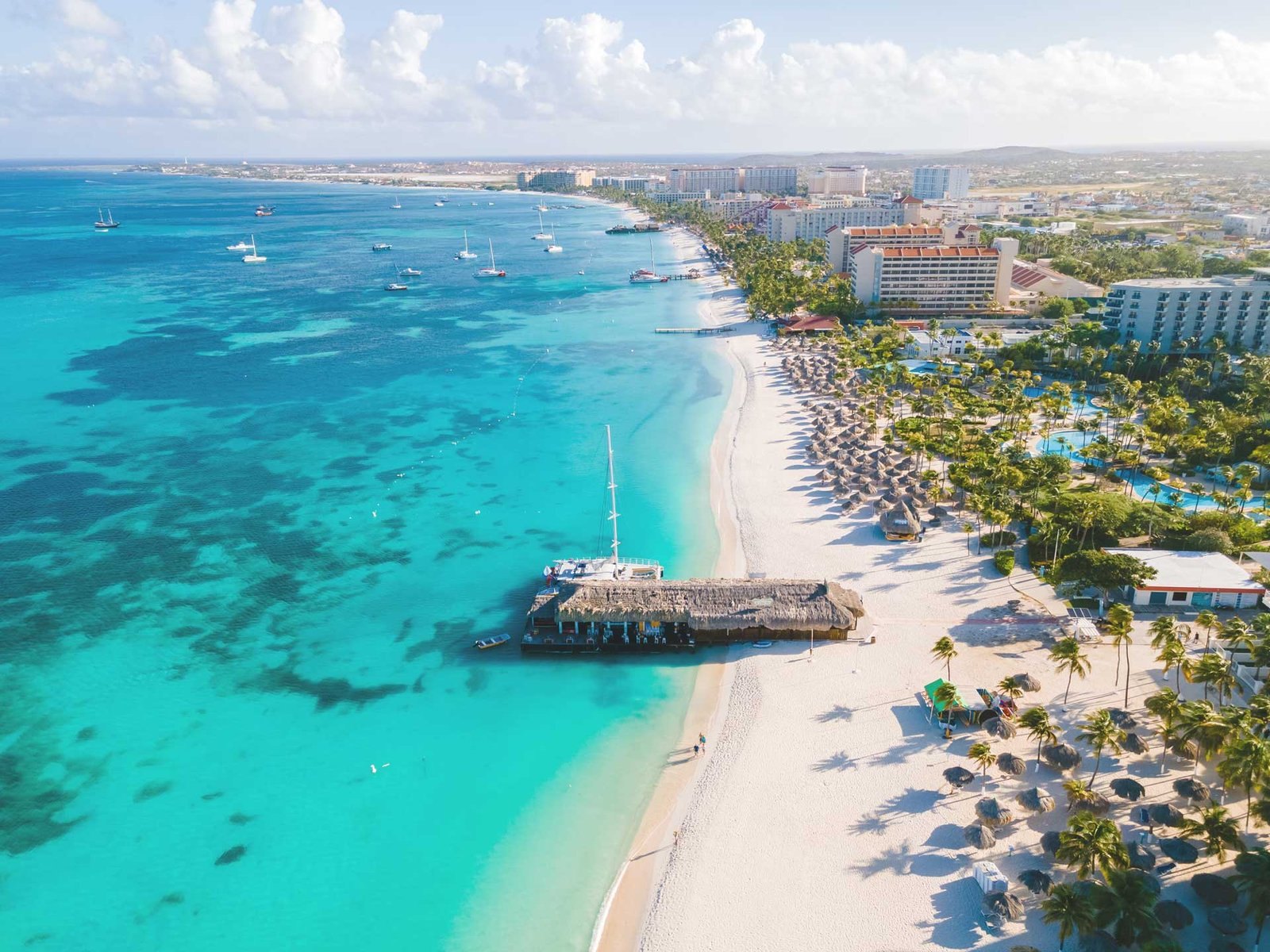
No, and on this point the sources leave no room for doubt. In February 2026 the Government of Aruba stated that all of the island's beaches are public, and its tourism minister added that no beach in Aruba will ever be owned by a hotel. The courts put the same thing in property terms: in an April 2019 judgment, Aruba's court of first instance treated it as common knowledge that the island's beaches are public and cannot be acquired as property, pointing to the many signs in the hotel area that tell visitors so.
That settles what the word beachfront can mean here. It describes where a building stands in relation to the water, usually in the first row with the sea in front of the terrace. It does not describe a title to the sand, so the shore below a beachfront condo stays open to residents, hotel guests and day visitors alike. Frontage buys position, outlook and a walk of a few steps; it cannot buy privacy on the beach.
The tourism authority adds one nuance worth knowing before reading a listing. In a few cases a section of beach falls within a hotel's leasehold land, and that section is meant for the hotel's guests rather than the public. It is an arrangement belonging to a particular hotel, so a condo listing that hints at a private beach deserves one plain question to the notary: does any beach section actually fall inside this building's own land or lease?
Who decides what stands on the sand in front of the building?
The government, through permits. Under the decree governing the charges and fees of the Department of Infrastructure and Planning (DIP), no public ground or public water may be occupied without a permit granted by or on behalf of the minister responsible for infrastructure, and a permit can be refused to keep public order and safety or to protect the environment. For the west-coast beaches, from Bushiri to Arashi, DIP weighs each application to use the public beach against a policy guideline known by its Dutch initials, RRIS, whose starting point is that the beaches belong to the public domain and must remain equally open to everyone. The rows of palapas and loungers in front of a hotel are there on those terms: the tourism authority describes certain beach sections as designated for hotel use through official permits, and the same system governs chair, umbrella and water-sports rentals on Eagle Beach.
Two consequences follow for anyone buying on the shore. First, beach furniture is a permitted use, not a feature of a deed, so when a listing shows loungers, a beach service or a reserved spot, ask who holds the permit behind it, whether it belongs to the building or to a neighbouring hotel, and what becomes of it if the rules change. Second, the rules are changing. The government opened a review of the RRIS in February 2026, promising stricter and clearer regulations, and in April 2026 the tourism authority reported temporary guidelines from DIP, in force while the update is finalized: a hotel setup that has been arranged and assigned counts as in use even after its guest has gone for a swim. Buy the position on the shore, then, rather than the furniture arrangement you saw on a visit.
- August 2014 Beach policy (RRIS) officially proclaimed
- April 2016 Policy implemented on the west-coast beaches
- February 2026 Government opens a review of the policy
- April 2026 Temporary guidelines reported in force
What does nesting season ask of a home on the shore?
More than most buyers expect, because Aruba's west-coast beaches are nesting beaches. The island's Department of Nature and Environment says four species of sea turtle, the hawksbill, loggerhead, green and leatherback, come ashore to lay eggs from March to December, and that local and international law prohibits harassing or harming the turtles or their nests. Among its advice to anyone near the water: use no light on or along the sea at night, because artificial light draws turtles away from what they came ashore to do. Every species has been legally protected since 1987, and Turtugaruba, the foundation that monitors the nests, patrols every beach daily in the season and fences nests, above all on heavily visited beaches exposed to artificial light; on Eagle Beach its team once freed a nesting leatherback caught in the ropes used to moor jet skis.
For an owner on the sand, that turns a few ordinary things into conservation questions for most of the year: balcony lights, a terrace gathering after dark, loungers left out overnight, a rental guest's flashlight on the shore. The tourism authority has pointed to the low-rise hotel area along Eagle Beach as a place where eggs are laid and hatch. None of this is exotic, but it is better understood before signing than discovered afterwards, so ask how a beachfront building handles exterior lighting during the nesting months and what its house rules tell owners and their guests. This page found no binding lighting ordinance for beachfront buildings, so the answer may well be a voluntary policy rather than a legal rule.
Which listing claims should a beachfront buyer test, and against what?
Most beachfront promises can be checked against something firmer than a brochure. The table sets the usual ones beside the document or authority that settles them. Several of the checks are already part of an Aruban purchase, because the civil-law notary who draws the deed runs cadastral and title searches and looks at matters such as rights of way before the deed is passed; the rest cost one written question to the right person.
| What the listing says | What settles it | Who to ask |
|---|---|---|
| Private beach | All beaches are public; only a hotel's leasehold section is reserved, for that hotel's guests | The notary, from the deed and the public register |
| Loungers or beach service included | A DIP permit to use the public beach, under a policy now being revised | The seller or the owners' association, in writing |
| Beachfront plot | The deed: land held outright or on long lease, and where its boundary runs | The notary |
| Lasting sea view | What the spatial plan allows on the land between the building and the water | DIP, the planning department |
| Terraces lit at night | The nesting season, March to December, and the building's lighting policy | The owners' association |
If the sand is public anyway, what does YOO Aruba offer instead?
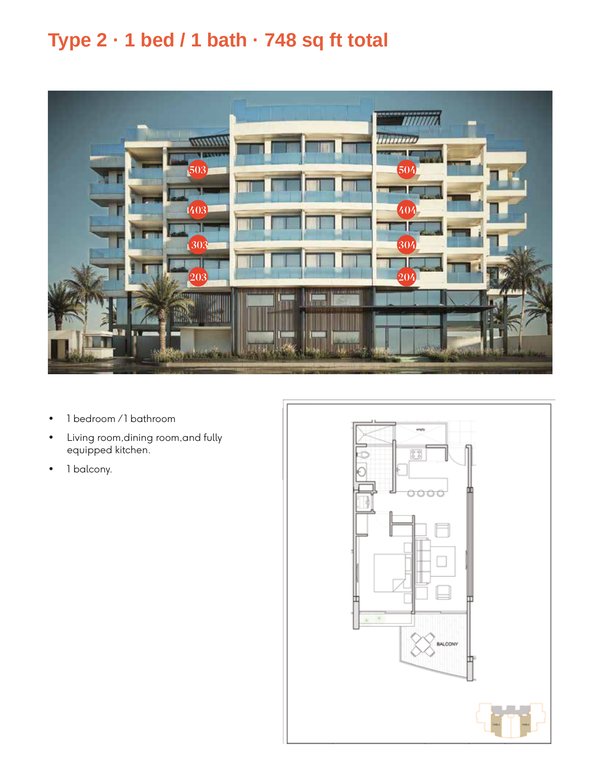
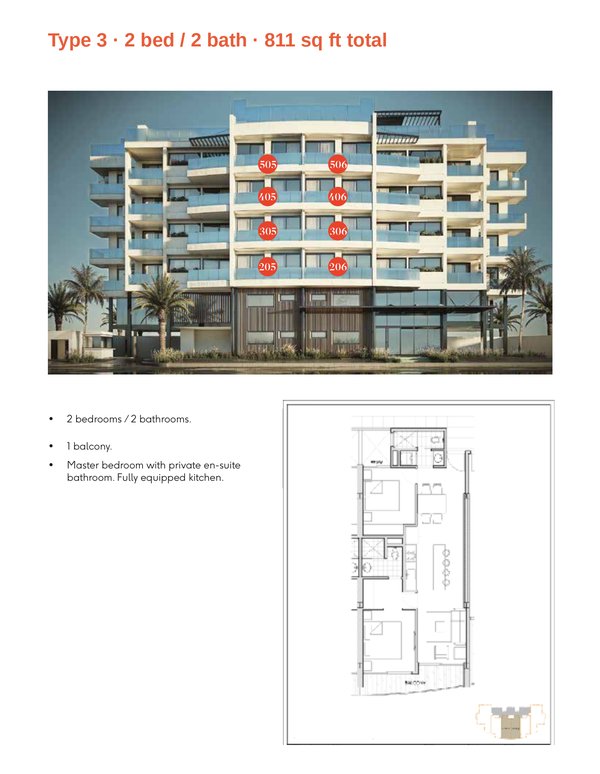
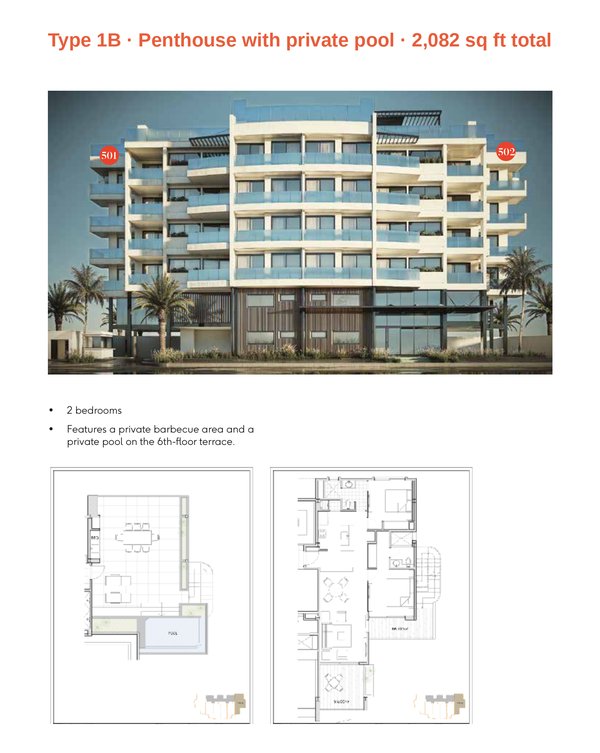
An honest distance to the beach, and the sea from above rather than at the door. YOO Aruba is being built in Ponton, a residential district of Oranjestad, so it is not a beachfront building and does not present itself as one. Its site is about 2 miles and 6 minutes by car from Eagle Beach, and about 2.7 miles and 12 minutes from the Palm Beach high-rise strip, and because every one of those beaches is public, an owner uses them on the same footing as the people living beside them. What the building offers in place of frontage is height. The developer lists sea views for its six corner residences of 1,155 sq ft, on levels 2 to 4 with two balconies apiece; the two penthouses of 2,082 sq ft each keep a private pool and barbecue on a sixth-floor roof terrace, with a balcony that wraps all the way round; and all 26 residences share a rooftop pool and sun deck looking out over the island.
The address also leaves most of this page's questions behind. There is no beach permit to ask about and no shared stretch of sand to manage, because the amenities sit on the building's own roof and in its own lobby: a gym, a sauna and cold plunge, a yoga room, a massage room, a lobby bar and a 24-hour concierge. On the developer's price list of 29 July 2026, prices run from $443,000 to $1,659,000. Completion is committed for Q4 2027, as an estimate subject to force majeure, and which residences remain open changes as contracts are signed, so availability is a question for the sales team rather than for this page.
Common questions
- Are all beaches in Aruba public?
- Yes. The Government of Aruba stated in February 2026 that all beaches are public, and a 2019 judgment of Aruba's court of first instance treated it as common knowledge that they cannot be acquired as property. The tourism authority notes that in a few cases a beach section falls within a hotel's leasehold land and is meant for that hotel's guests.
- Can a condo owner use the hotel loungers on the beach in front?
- Only if they are set out for that owner. Under the temporary guidelines reported in April 2026, a hotel setup that has been arranged and assigned counts as in use even when its guest steps away, and non-guests should not use or move it. The shoreline itself stays open to everyone, towel and all.
- Is YOO Aruba a beachfront building?
- No. YOO Aruba is in Ponton, a residential district of Oranjestad, about 2 miles and 6 minutes by car from Eagle Beach. The developer lists sea views for its six corner residences, and all 26 residences share a rooftop pool.
- When do sea turtles nest on Aruba's beaches?
- From March to December, according to Aruba's Department of Nature and Environment, which counts four species coming ashore to lay eggs. It asks that no light be used on or along the sea at night, and local and international law prohibits harassing or harming the turtles or their nests.
- Is Aruba's beach policy changing?
- It is under review. The government announced a modernization of its beach policy, the RRIS, in February 2026, and in April 2026 the tourism authority reported temporary guidelines in force while the update is finalized. Check the current position before relying on any beach arrangement a listing describes.
Want the details for your own situation?
Ask about availability, layouts or the buying process, and someone from the sales team will get back to you.
Get in touch