Condos in Aruba: what sits under the building, and what the island charges
Searching for condos in Aruba turns up photographs, a square footage and a price. None of those three tells you what the apartment will oblige you to. Two residences of the same size, in the same district, at the same price can hand their owners quite different obligations, for three reasons that have nothing to do with the building: the land underneath is held in one of two ways, the owners' association around it sets its own budget, and one of them is let to visitors while the other is not. This page takes those three in order, gives the Aruban figure each turns on, and marks the questions only a civil-law notary or a tax advisor on the island can close.
What a condo in Aruba is, once you look past the photographs
A condominium here is an appartementsrecht, an apartment right under the Civil Code of Aruba: a share in a divided property carrying the exclusive use of one residence, plus membership of the owners' association that runs the rest. That much is the same in every building on the island. What differs, and what a listing almost never states, is the answer to three questions.
First, what the ground is held under. Second, what the association's budget commits you to, since a share of it arrives whether you are on the island or not. Third, whether the residence will be let to visitors, because the moment it is, Aruba's tourism levies attach to the nights it is occupied. Price is the number a buyer compares; these three decide what the price actually bought. Aruba is a constituent country of the Kingdom of the Netherlands with Dutch-derived civil law, and each of the three is settled by a document a civil-law notary can read out of the public register, the Kadaster, before anything is signed.
The ground under the building: property land or a long lease
Aruba holds land two ways. Property land, eigendomsgrond, is ground owned outright and indefinitely. A long lease, erfpacht, leaves the grantor as owner of the ground and gives the holder a long right to use and build on it against a periodic ground rent. The second is not a tenancy in any sense a renter would recognise: the holder may use and dispose of the parcel much as an owner does, may mortgage it, and transfers it by the same notarial route as ownership. Published guidance on Aruban real-estate law adds that the grantor can end a long lease only for a long-running failure to pay or a serious breach, and that the holder is then compensated for the buildings standing on the land.
Why this reaches a condo buyer and not only a land buyer: the Civil Code lets a split into apartment rights be made by a long-leaseholder as readily as by an owner, so your apartment right is carved out of whatever right holds the ground and cannot outlast it. Neither form is a defect and both trade routinely, but long-lease terms vary parcel by parcel, so no page can give you the remaining years or the ground rent for a specific building. Ask in writing which form applies and have the notary read the register. Our own building is rising on plots 4585 and 4586 in Kukwisa, Ponton, and the tenure of those parcels is a matter for the deed, not for our marketing.
What a purchase attracts, and who fixes each figure
The first two rows are one mechanism read twice. Aruba's transfer tax is not a flat rate but a two-tier one, and it is computed on whichever is higher, the price agreed or the value the tax office already holds for the property. In a legal transfer the notary is the party who withholds the tax and passes it on, so the figure lands in the settlement rather than in a separate bill months later. The buyer bears it, and the island's custom is that the buyer picks the notary who draws the deed, which is practice rather than statute.
What this page deliberately does not do is quote a percentage for the notary's own fee, or an all-in closing range. Figures of that kind circulate widely and none could be verified against a published scale, so the honest answer is that the notary quotes them for the specific deed and a buyer should ask before instructing one. An inheritance, worth knowing for a longer-term owner, attracts no transfer tax at all.
| Charge | Who sets or collects it | Rate or basis |
|---|---|---|
| Transfer tax (overdrachtsbelasting) | The tax office; the notary withholds it at transfer and remits it | 3% on the part of the value up to and including Afl. 250,000, about US$139,665, and 6% on the part above it, in force since 2023 |
| The value the transfer tax is charged on | The tax office and the notary, from the deed | The higher of the purchase price and the property's registered value |
| Notary's fee and registration | The notary, whom Aruban practice leaves the buyer to choose | Quoted for the specific deed; no percentage is published here because no verifiable scale was found |
| Land tax (grondbelasting), every year | The tax office | 0.6% of assessed value for a non-resident individual or any company; resident individuals pay a progressive scale |
| Owners' association contribution | The association's own budget, voted by the owners | A share of the building's running costs; at YOO Aruba the charge is levied per square foot of chargeable area |
| Tourist levy and environmental levy | The tax office, but only for nights let to visitors | 12.5% of the accommodation price, plus a US$3 environmental levy per occupied room per night |
Letting it to visitors: what Aruba charges on an occupied night
Here an Aruban condo departs most sharply from the assumptions a buyer brings from elsewhere, and a listing never mentions it. Two levies attach to short-stay accommodation. The tourist levy runs at 12.5% of the accommodation price and has stood at that rate since 2023. On top of it sits an environmental levy of US$3 per occupied room per night. The important word in both is accommodation, not hotel: published guidance from tax firms on the island is explicit that houses, villas and apartments let to visitors are inside the net, commercially or privately, and that whoever owns or operates the accommodation is the taxpayer.
Who files and remits depends on how the letting is arranged: Aruba's tax office states that where a condominium owner lets through a third party, that third party is the liable party, which is a materially different administrative position from letting the residence yourself. Rental income is separately declared each year. On turnover tax the published guidance we read does not agree with itself, and this page will not pick a side — that is a question for an Aruban tax advisor on the facts of your arrangement. A registration and licensing regime for vacation-rental owners has been announced but was not in force when this was written. One thing no advisor settles: the building's own rules on short-term letting, which bind you regardless.
The number the tax office keeps, and why it matters twice
Behind both the purchase and the years after it sits one figure most buyers never ask for: the value the tax office holds on record for the property. It is not the asking price and not a valuation you commission. It is set for five-year periods, and it does two jobs. At purchase it is the floor under the transfer tax, which is computed on the higher of it and the price. Every year afterwards it is the base of the land tax, at 0.6% of assessed value for a non-resident individual or a company, while resident individuals sit on a progressive scale. A buyer who later becomes an Aruban resident moves onto that scale, so the flat rate describes a position rather than a permanent feature of the property.
Two other documents carry numbers worth as much. The notarial deed of division says which parts of the building are exclusively yours and what share of the whole you hold; shares are equal unless the deed sets another ratio, and where it does it must state the basis for it. The association's accounts say what the building costs to run and how much sits in its reserve fund, which exists for the costs that are not the ordinary annual ones. Ask for all three before committing.
Where a pre-construction condo in Ponton sits in that picture
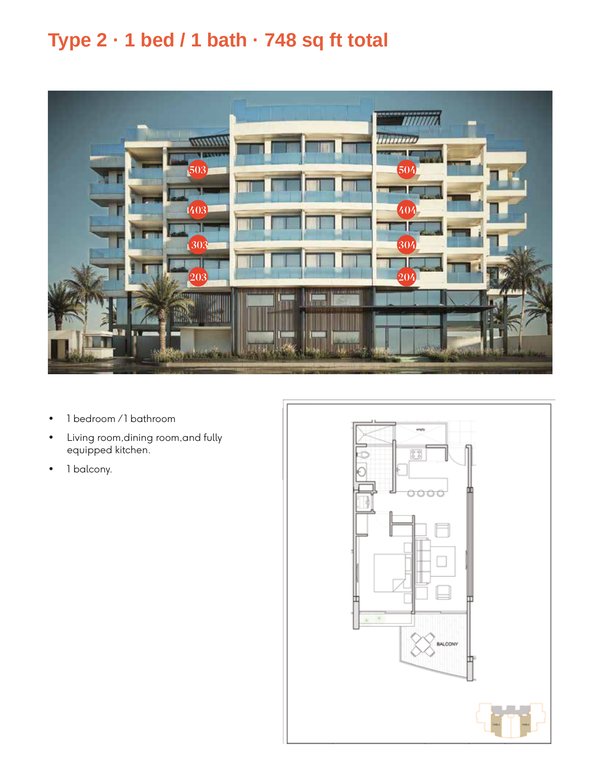
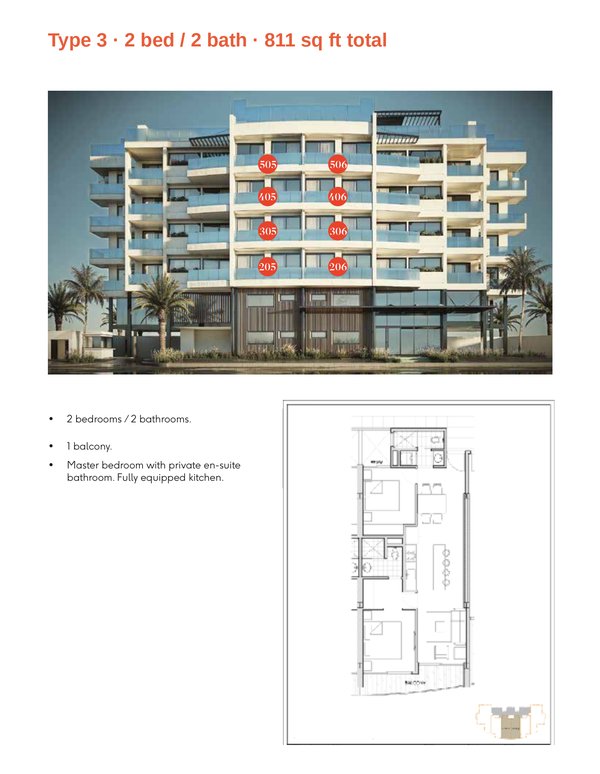
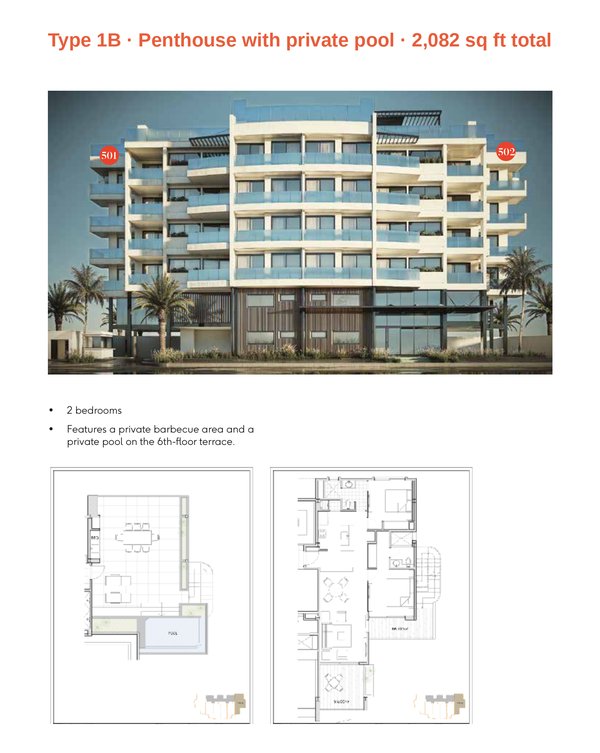
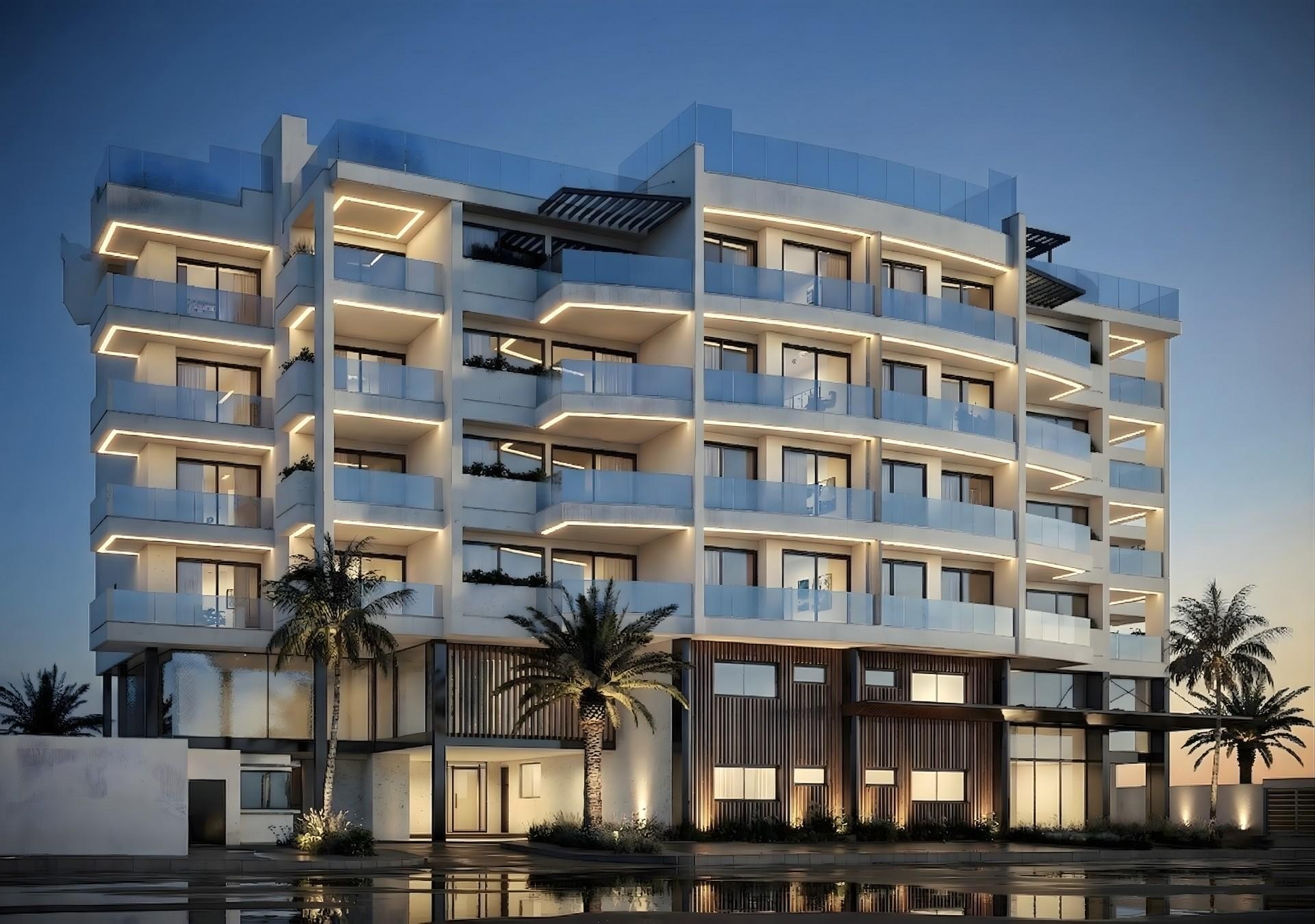
Ours is one point on the map rather than the map. YOO Aruba is a boutique building of 26 residences over five residential floors in Ponton, a lived-in district of Oranjestad, 25 of them offered for sale. Layouts run from 748 sq ft for a one-bedroom to 2,082 sq ft for a two-bedroom penthouse, and every size quoted is total area, interior plus balconies, exactly as the developer's price list states it. Prices are set in US dollars and start at $443,000, which matters less than it looks: the florin has been held at 1.79 to the dollar since 1986, so a florin-denominated tax bill converts to a dollar figure that does not drift.
Delivery is committed in the sale and construction agreement to Q4 2027, stated there as an estimate subject to force majeure. Residences are handed over finished and vacant with a fully equipped kitchen; furniture is not part of the price. Seven shared amenities and a 24-hour concierge are funded and governed by the owners collectively. Downtown Oranjestad is 1.3 miles away, a 5-minute drive, and Eagle Beach 2 miles, about 6 minutes. An optional rental program exists for owners who want the residence to earn while they are elsewhere, which puts the levies above squarely in view.
Common questions
- Can a foreign national buy a condo in Aruba?
- No restriction on foreign ownership was found in the sources we checked: foreign and local individuals and entities alike may hold Aruban real estate, and ownership takes effect on registration in the public register through a civil-law notary. State it that way rather than as a right granted to foreigners. What it certainly does not do is affect your immigration position — a permit to live in Aruba is a separate application to the immigration authorities, and buying a residence does nothing toward it.
- Is a condo on long-lease land worse than one on property land?
- It is a different thing rather than a lesser one, and the answer turns on terms no web page can see. A long lease is a real right: the holder may use, sell, mortgage and pass on the parcel, the grantor can end it only for a long-running failure to pay or a serious breach, and buildings are compensated on termination. What varies parcel by parcel is the remaining term, the ground rent and the renewal conditions — ask for those in writing before making an offer, and have the notary read them out of the register.
- What taxes will a condo in Aruba cost me?
- At purchase, transfer tax at 3% on the part of the value up to and including Afl. 250,000, then 6% on the part above it, charged on the higher of the price or the registered value and withheld by the notary. Each year afterwards, land tax at 0.6% of assessed value for a non-resident individual or a company. If you let the residence to visitors, a 12.5% tourist levy on the accommodation price and a US$3 environmental levy per occupied room per night. Capital gains on a residence are not settled in sources this page can cite, so that one goes to an Aruban tax advisor.
- Do I have to rent my Aruban condo out?
- No. At YOO Aruba the rental program is optional, and the tourism levies described above arise only on nights a residence is actually occupied by a paying guest. A residence kept for your own use attracts the yearly land tax and the association contribution and nothing from the tourism side. If you do let it, how the letting is arranged changes who files and remits, so settle that with an Aruban tax advisor before the first booking rather than after it.
Want the details for your own situation?
Ask about availability, layouts or the buying process, and someone from the sales team will get back to you.
Get in touch