Aruba condos for sale: the registered document behind every listing
Search for Aruba condos for sale and you get photographs, a square footage and a price. What is actually on offer is a legal object with a precise shape under Aruban law - an apartment right - and nearly everything that decides what owning it costs, and what you may do with it, lives in a registered deed the listing never mentions. This page is written by the developer of a 26-residence building in Ponton, Oranjestad. It sets out what that object is, which documents define it, and the handful of questions that separate two condos that look identical in a gallery.
What is actually for sale when an Aruban condo is listed?
An Aruban condominium listing is offering a legal object with a name: an appartementsrecht, an apartment right. Aruban law is Dutch-derived civil law, and the Civil Code of Aruba gives these rights a whole title of its property book. The right is not a box with a door number on it. It is a share in everything the division covers, and that share carries the exclusive right to use the parts of the building set aside for private use. The corollary is the half buyers skim past: the structure, the roof, the stair core, the lobby and the plant are not somebody else's department. They are partly yours, in whatever proportion the deed records.
Two things follow before you look at a single price. The right comes into existence only when the deed that creates it is entered in the public register, the Kadaster, through a civil-law notary - until then there is a drawing and an intention, not a right. And the party who performed the division does not have to own the ground outright: a holder of a long lease may divide a building into apartment rights exactly as an owner may. An apartment right can therefore rest on land held outright or on land leased long-term from the state, and no photograph will ever show you which. That question belongs in writing, early.
The deed of division answers what the listing leaves out
The instrument that creates the apartment rights is the akte van splitsing, the deed of division. It is a notarial deed, it is registered, and a drawing marking the boundaries of every privately used part is attached to it. Because it is registered it is obtainable, which makes it the single most useful document a condo shopper in Aruba can ask for - and the one almost no listing thinks to offer.
Its regulations are required to settle precisely the things a listing keeps vague. They must state which debts and costs fall on the owners jointly. They must provide for an annual financial accounting and for the contributions each owner pays in. They must govern the use, management and upkeep of the parts nobody owns alone. They must say who insures the building, and against which risks. And they must establish the association of owners together with its statutes, which in turn have to fix the periodic contributions - at least annually - and the number of votes each owner may cast. Read in that order the deed tells you what you will pay, what you may do, who repairs what, and how much say you have when the building disagrees with you. A monthly figure in a listing answers none of those.
Why two condos in one building do not carry the same costs
The default position in Aruban law is that the shares created by a division are equal. A deed may set a different ratio, and most do, but if it does it has to state the basis on which that ratio rests. That single requirement is why "what are the monthly costs?" is the wrong opening question. The useful one is: on what basis is my share calculated, and where in the deed does it say so?
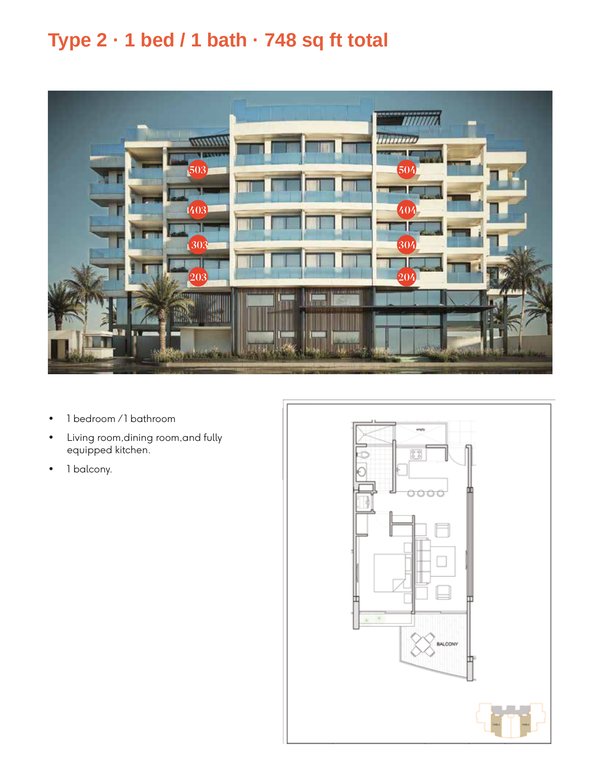
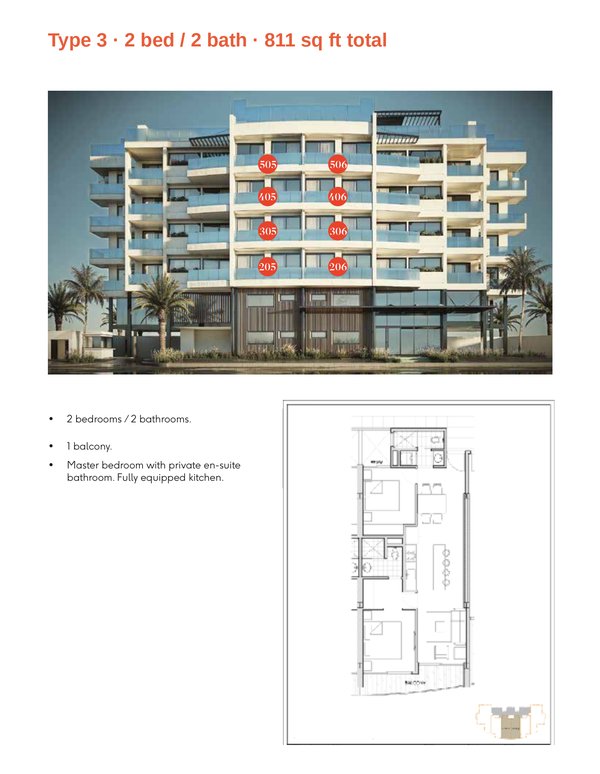
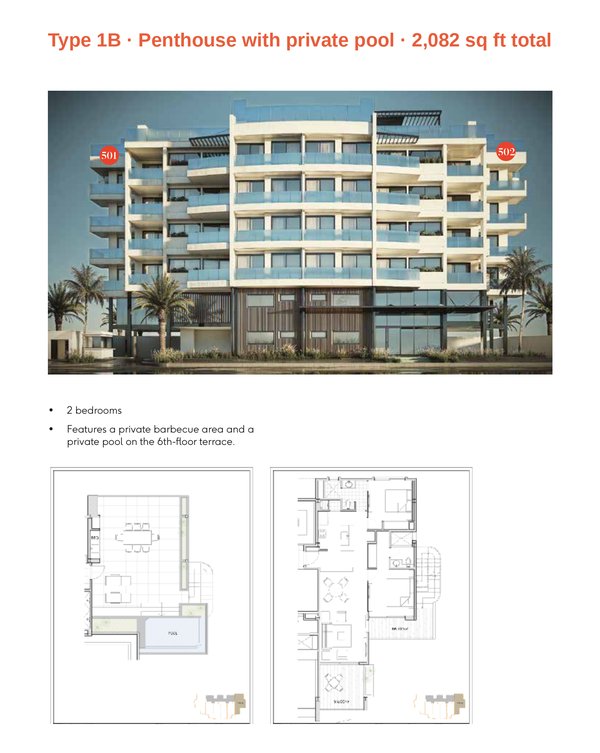
This building answers by area. The association charge at YOO Aruba is levied per square foot of chargeable area, so a 748 sq ft one-bedroom, a 1,155 sq ft corner residence and a 2,082 sq ft penthouse do not carry equal slices of the same roof. Written that way the charge tracks what was bought rather than counting front doors. Other buildings adopt other bases, entirely lawfully, which is why a figure lifted from one listing tells you nothing about another until you know which basis produced it. Comparing two Aruban condos on their monthly charge alone compares two answers to two different questions.
The owners' association is not a service you can decline
Acquiring an apartment right makes you a member of the building's Vereniging van Eigenaars, its association of owners, by operation of law. Nobody signs up and nobody opts out: membership begins when the right is acquired and ends by operation of law when it is given up. The association is a legal person in its own right, it manages everything not reserved for exclusive private use, and it is required to keep a reserve fund for costs other than the ordinary annual ones.
That reserve is the part worth staring at. Roofs, lifts, pumps and pool plant all reach the end of their lives on a schedule nobody enjoys, and a building whose charges look attractively low is sometimes a building that has not been funding the fund. Ask what the reserve currently holds; ask what the last annual accounting showed; ask whether major work has been resolved upon but not yet levied. At YOO Aruba the association will start with a building nobody has used - seven shared amenities and a 24-hour concierge, and no history behind them - which removes a track record to inspect and makes the funding rules in the documents the thing to read instead.
Unpaid contributions follow the apartment, and one sheet of paper limits that
On a resale this is the rule worth knowing before you negotiate rather than after. Aruban law makes the acquirer and the former owner jointly and severally liable for the contributions that became due, or are still to become due, in the current and preceding financial year. Buy without looking and you can take on somebody else's arrears along with their view.
The same law then puts a ceiling on that exposure, and the ceiling is a document. The notary must attach to the deed of transfer a statement issued by the association's board, setting out what the selling owner owes the association on the day of transfer; the acquirer is liable no further than the amount that statement shows. The statement must also give the size of the reserve fund. So two facts a buyer badly needs arrive together on one sheet, produced as a matter of law rather than as a courtesy - and a seller reluctant to have it produced early has told you something without meaning to.
Reading a pre-construction listing, and where this one sits
A building that does not exist yet can still be sold as apartment rights. Aruban law expressly allows a division made in connection with a building still to be erected, and the rights come into being when the deed is registered rather than when the concrete cures. The questions for a pre-construction listing are therefore documentary - which entity is contracting, what the agreement commits to, what the warranty actually covers - and they sit alongside the tax a buyer owes at transfer. That is the overdrachtsbelasting, charged at 3% on value up to and including Afl. 250,000, and at 6% above that, followed every year by the grondbelasting at 0.6% of assessed value for an owner who is not a resident individual. Prices here are quoted in US dollars while both taxes are written in florins, which the Centrale Bank van Aruba has held at 1.79 to the dollar since 1986.
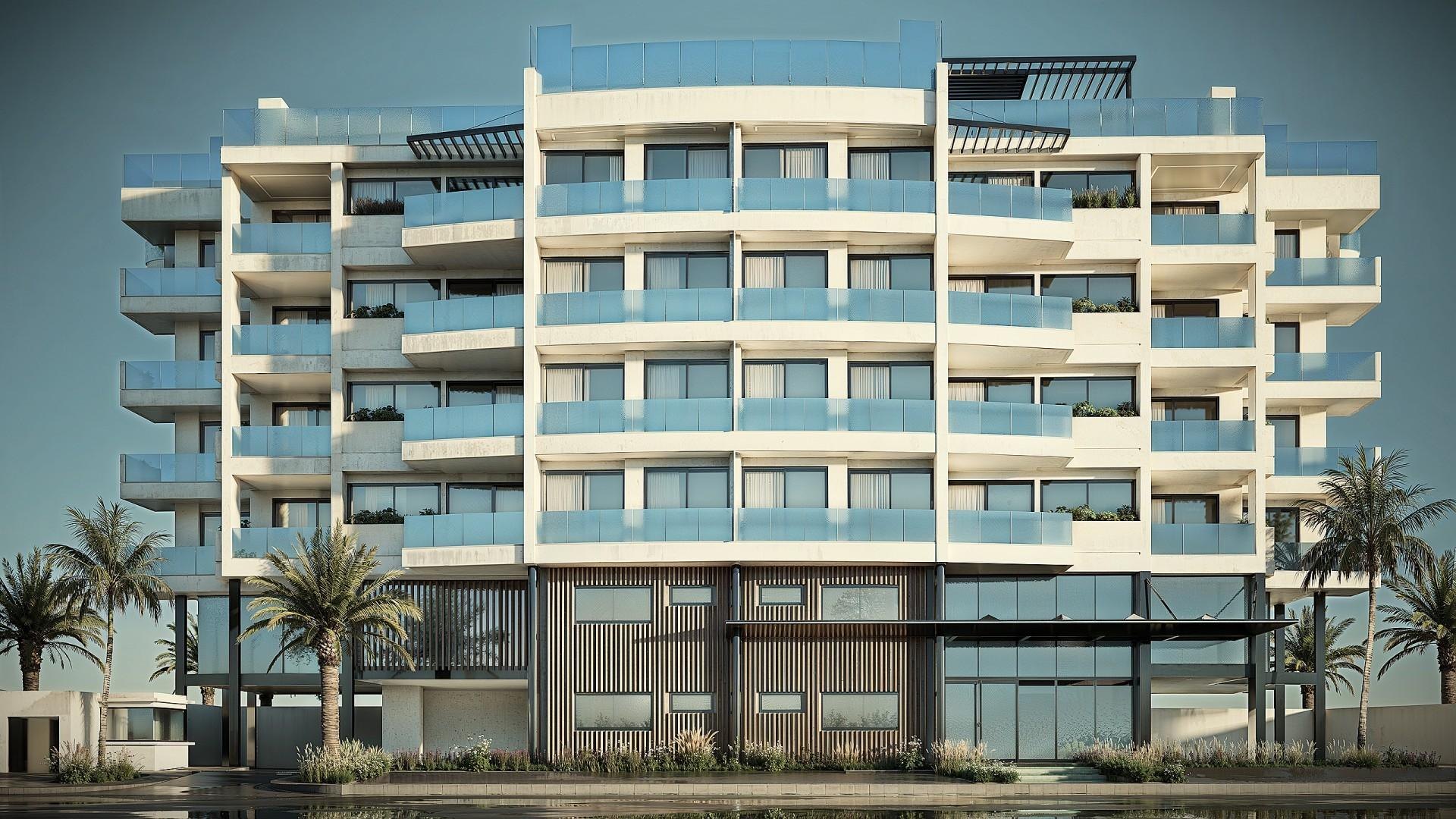
Described plainly, this is one listing among the island's. YOO Aruba is a boutique building in Ponton, Oranjestad: 26 residences across five residential floors, in five layouts running from a 748 sq ft one-bedroom to a 2,082 sq ft two-bedroom penthouse, with 811 sq ft, 1,076 sq ft and 1,155 sq ft in between, from $443,000, and committed in the sale and construction agreement to Q4 2027. Every size quoted is total area, interior plus balconies, as the developer's price list states it. Residences hand over finished and vacant with a fully equipped kitchen, under a one-year limited warranty on labour and materials and a five-year warranty on structural elements. Eagle Beach is 2 miles away, a 6-minute drive. How the deed of division reads for a particular residence is a document to be read at the notary, not a line in a brochure, and that is the right order to do it in.
Common questions
- What am I buying when I buy a condo in Aruba?
- An apartment right: a share in the property covered by the division, carrying the exclusive right to use one residence and whichever parts are marked out with it. The structure, roof, lobby and plant come with it in the proportion the deed of division records, and so does membership of the building's association of owners. The right exists once the notarial deed is entered in the public register, not when a listing is agreed.
- Which documents should I read before making an offer on an Aruban condo?
- Four, and all four can be obtained. The deed of division with its drawing, which fixes what is privately used and what is shared. The regulations and the association's statutes, which set the contributions, the votes, the insurance and the upkeep duties. The register entry for the parcel, which shows whether the ground is held outright or on a long lease. And, on a resale, the board's statement of what the seller owes on the day of transfer. An Aruban civil-law notary retrieves the registered ones.
- Can I inherit the previous owner's unpaid association contributions?
- Only up to a stated amount. Aruban law makes the acquirer and the former owner jointly liable for contributions falling due in the current and preceding financial year, then limits the exposure: the notary must attach to the transfer deed a statement from the association's board setting out what the seller owes on the day of transfer, and the acquirer is liable no further than that statement shows. The same statement reports the size of the reserve fund, which is why it repays reading twice.
- What tax should I budget beyond the price of an Aruban condo?
- Two at least. The buyer pays the transfer tax, the overdrachtsbelasting, charged at 3% on value up to and including Afl. 250,000, and at 6% above that, and an Aruban notary computes it on the higher of the purchase price and the tax office's value. The annual land tax, the grondbelasting, then falls due at 0.6% of assessed value for an owner who is not a resident individual. Aruba operates no buyer-side exemption for a residence, so neither is avoidable, and an Aruban tax advisor should confirm both against your own position.
Want the details for your own situation?
Ask about availability, layouts or the buying process, and someone from the sales team will get back to you.
Get in touch