Aruba real estate: what the island's property landscape is made of
Aruba real estate is a small, low-rise market with one structural question sitting underneath all of it: how the ground beneath a home is held. We are building 26 residences in Ponton, Oranjestad, so this page is written from that side of the table - what kinds of property the island actually contains, what property land and long-lease land mean, what you own when you own an apartment here, and where a pre-construction residence like ours fits. It is an orientation rather than a listings page, and where a figure is not ours to give, it says so.
What kinds of property make up Aruba's market?
Aruba's property market is made of four things a foreign buyer will actually meet: standalone houses, from small older cunucu-style homes inland to modern villas; condominium apartments in low- and mid-rise buildings; apartments inside resort and hotel-branded schemes along the north-west coast; and undeveloped building plots. There is very little tall construction anywhere on the island, and no city-and-suburbs split to navigate - Aruba is small enough that where a property sits is measured in minutes rather than in regions. From our own site in Ponton, downtown Oranjestad is a 5-minute drive at 1.3 miles, Eagle Beach 6 minutes at 2 miles, the airport 10 minutes at 2.9 miles and Palm Beach 12 minutes at 2.7 miles.
That scale changes what choosing between property types is really about. It is rarely a question of which end of the island you can afford to be on; it is a question of how you intend to use the home, and how much of the work of owning it you want a building to absorb on your behalf. The legal frame sits behind all four categories equally: Aruba is a constituent country of the Kingdom of the Netherlands, its law is Dutch-derived civil law, and every transfer of real estate passes through a civil-law notary acting as a public officer rather than as one side's lawyer. Dutch and Papiamento are the official languages, English and Spanish are widely spoken, and notarial deeds are normally drawn in Dutch, with the notary taking a buyer through the instrument before signing.
Property land and long-lease land: how the ground is held
Aruba holds land in two forms, and which one applies is the first thing to establish about any property on the island. Property land, eigendomsgrond, is ground owned outright: the owner holds the parcel and whatever stands on it, indefinitely. Long-lease land, erfpacht, leaves the state as owner of the ground and grants a long, renewable right to use it and to build on it, against a periodic ground rent. Both are real rights entered in the public register, both can be sold, mortgaged and inherited, and buildings on both change hands routinely. What differs is what sits underneath the building, and which obligations run with the parcel.
The terms attached to a long lease - how many years remain, what the ground rent is, what conditions govern its renewal and use - vary from parcel to parcel, which is why no page should quote you a figure for them and this one does not. Ask in writing which form a property is held under; if it is a long lease, ask for the remaining term and the conditions attached to it; and have the notary read the answer out of the register before anything is signed. Our own building is going up on plots in Kukwisa, Ponton, and the tenure of those parcels is stated on the deed rather than in our marketing - the notary confirms it for the residence you buy. We would rather point you at the register than summarise it for you.
What you actually own when you buy an apartment here
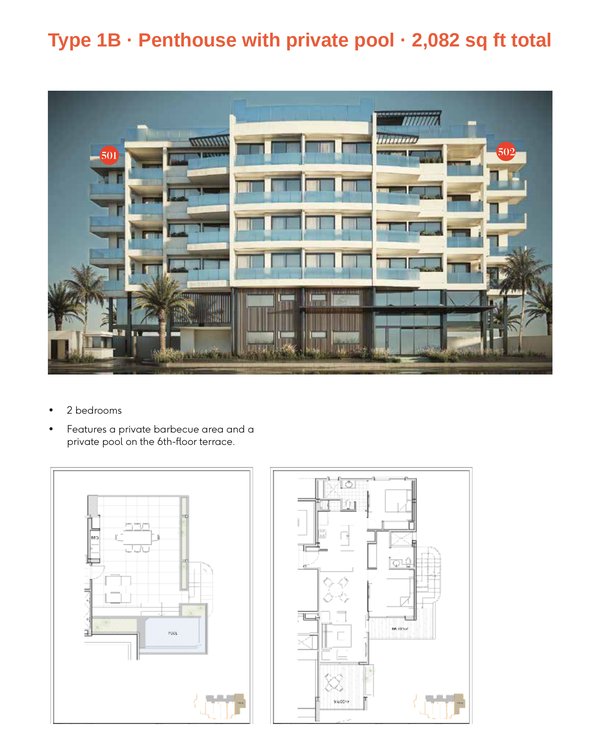
An apartment in an Aruban building is not simply a flat with a door number. Title splits the building in two: you own your residence, and with it an undivided share of everything that is shared - the structure, the roof, the lobby, the corridors, the plant rooms and the amenity floors. That share carries a vote in the owners' association and a bill from it. At our building the association charge is levied per square foot of chargeable area, so the 748 sq ft one-bedroom carries a smaller share of the same building than the 2,082 sq ft penthouse. The principle is proportional, and it is worth understanding before you try to compare two buildings' running costs.
The association is also the reason an amenity-carrying building works at all. Ours holds seven shared amenities - a rooftop pool, a gym, a cold plunge pool, a sauna, a yoga room, a private massage room and a lobby bar - plus a 24-hour concierge, and every one of them exists because the owners collectively fund and govern it. So before buying into any building here, read the association's rules and its budget the way you would read a lease: what they say about short-term letting, pets, alterations and reserves is what you are agreeing to. One thing ownership does not do, in any building on the island: it confers no right to live in Aruba. Aruba places no restriction on foreign ownership of a residence or of the share that comes with it, but a permit is a separate application to the immigration authorities, and buying at YOO Aruba does not advance it.
A new build and a resale are not the same purchase
The difference is structural before it is financial. A resale is a thing that exists: you can walk through it, its condition is what it is, an assessed value already sits with the tax office, and what it has cost to run is a matter of record. A new build is a commitment: you contract for a residence that is drawn but not yet standing, on a specification fixed at signature, and what you hold on the day is a document plus the developer's ability to deliver against it. Both are ordinary ways to buy a home. They simply invite different questions, and for a new build the questions are all about the document.
Those questions are worth putting to anyone, ourselves included. Which entity is contracting, and who designed the building? When is completion, and is that date a contractual commitment or a brochure aspiration? How is progress verified before delivery? What warranty covers the finished building, and what exactly is handed over? For ours: the contracting entity is Golden Kukwisa Tower Properties VBA, the building is by MESK Architects with interiors by YOO Studio, and completion is committed in the sale and construction agreement to Q4 2027, stated there as an estimate subject to force majeure. Construction is planned at 18 months and runs through architect-certified milestones. Each residence is handed over finished and vacant with a fully equipped kitchen - furniture is not part of the price - under a one-year limited warranty on labour and materials and a five-year warranty on structural elements.
What currency does Aruban property live in?
Two currencies sit side by side here, and only one of them moves. The Aruban florin, AWG, is the local money, and the Centrale Bank van Aruba has held it at 1.79 to the US dollar since 1986 - a peg, not a market rate. Statutory amounts are written in florins, which is why the transfer-tax threshold is expressed as Afl. 250,000 rather than as a dollar figure. New residences aimed at international buyers, ours among them, are generally quoted and contracted in US dollars: at YOO Aruba prices start at $443,000, and the optional rental program reports in the same currency.
What that means structurally is that the currency line in a buyer's risk register is close to empty while the peg holds. A purchase here does not carry the exchange exposure a floating-currency market would put on a dollar buyer, and a florin-denominated tax bill translates into a dollar figure that does not move from one year to the next. What the peg does not do is hold anything else still. Construction costs, association charges, electricity, water and insurance all move with their own markets, and a stable exchange rate is not the same thing as a stable cost of ownership.
Where a pre-construction residence like ours sits in that landscape
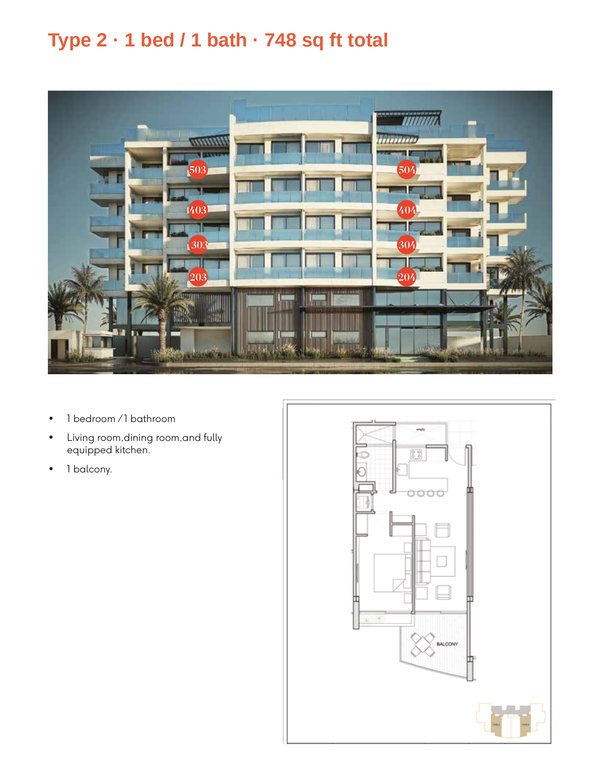
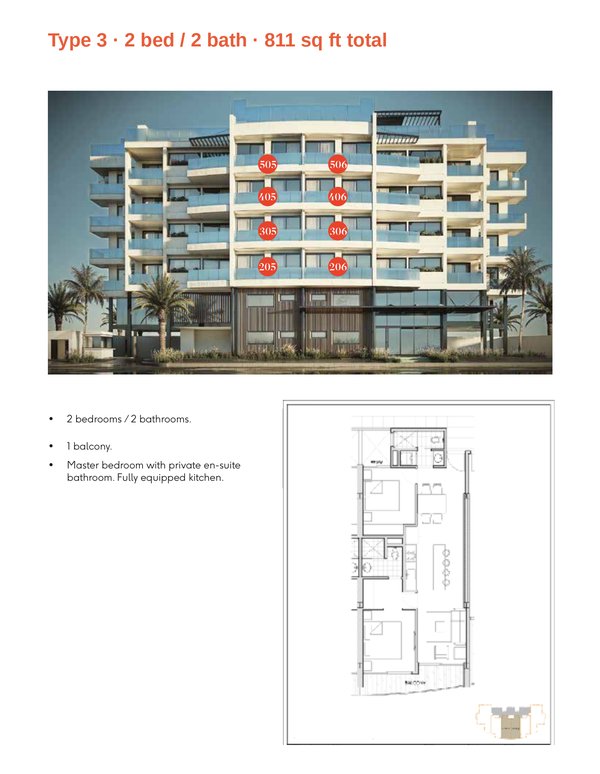
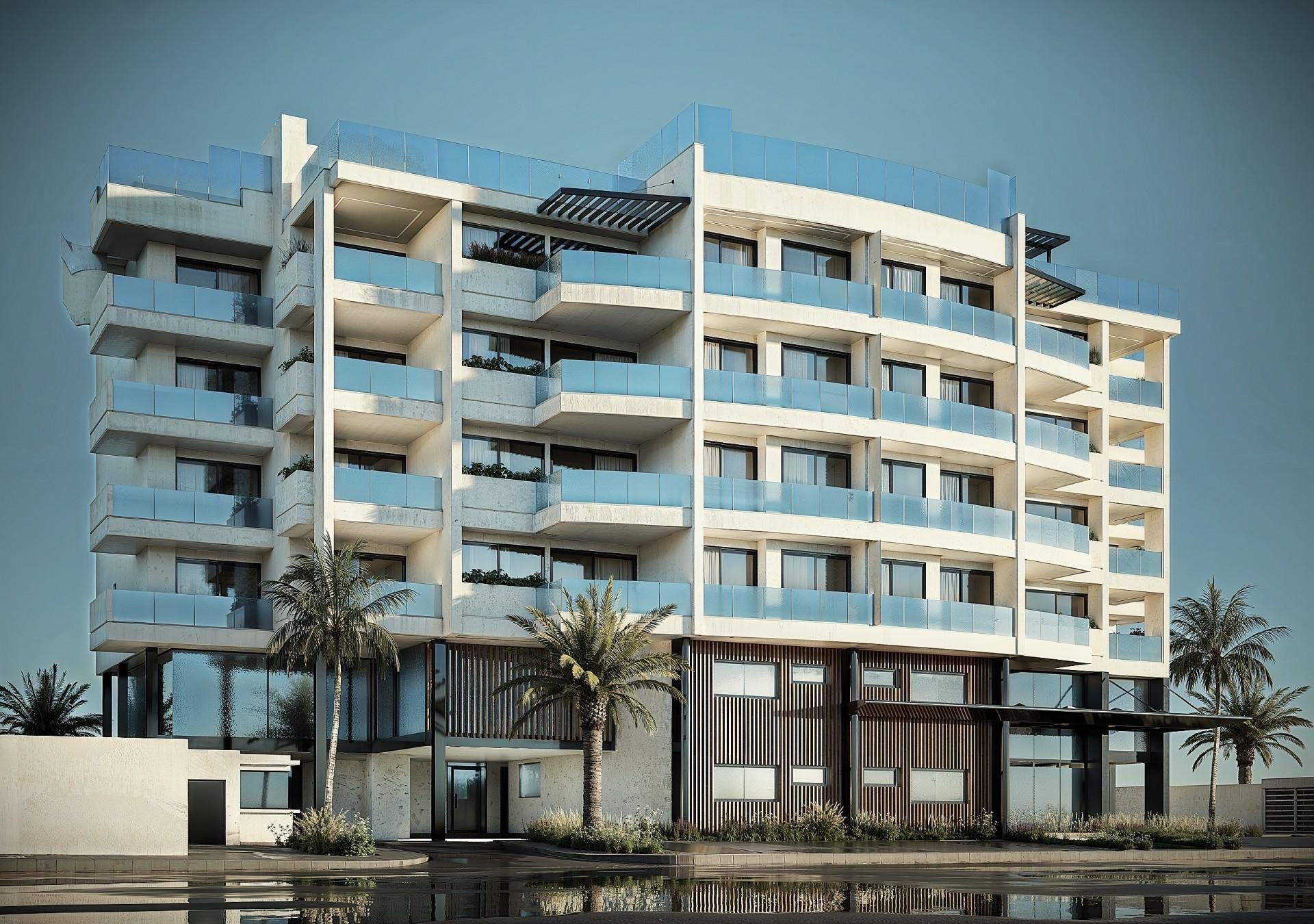
Ours is one point on that map rather than the map itself: a boutique mid-rise in a residential district, not a resort-strip tower and not a standalone house. There are 26 residences across five residential floors - a garden level plus four upper floors - in five layouts running from 748 sq ft for a one-bedroom to 2,082 sq ft for a two-bedroom penthouse, and the two penthouses each carry a private pool and a barbecue terrace on a sixth-floor roof terrace. Every size on this page is total area, interior plus balconies, exactly as the developer's price list quotes it; when you compare buildings, check which basis the other one uses, because an interior-only figure and a total-area figure are not the same measurement.
Who that suits is a narrower question than it first looks. It is not a hotel, and it is not on the sand - Eagle Beach is a 6-minute drive away. It suits a buyer who wants a home in a lived-in part of Oranjestad with the building absorbing the maintenance, and who may want that home to earn while they are elsewhere: an optional rental program exists for owners who choose it, and the developer's own analysis projects a net operating income of 9-16% of the purchase price depending on unit type, stated before Aruban income tax, land tax, insurance and furnishing. That is a projection rather than a promise, and a licensed financial advisor is the right person to test it against your own numbers.
Common questions
- What is the difference between property land and long-lease land in Aruba?
- Property land, eigendomsgrond, is ground owned outright, together with whatever stands on it. Long-lease land, erfpacht, leaves the state as owner of the ground and grants a long, renewable right to use and build on it against a periodic ground rent. Both are registered rights that can be sold, mortgaged and inherited. Because the remaining term and the conditions differ from parcel to parcel, ask which form applies to a specific property and have the notary read it out of the register before signing.
- Are there restrictions on the property a foreign buyer can hold in Aruba?
- Aruba does not restrict foreign ownership of real estate, and that holds for a residence, for the undivided share of common property that comes with it, and for land. What ownership does not do is grant any right to live on the island: a permit is a separate application to the immigration authorities, and owning at YOO Aruba does nothing toward it.
- How big are the residences at YOO Aruba, and how is the size measured?
- Five layouts, from 748 sq ft for a one-bedroom up to 2,082 sq ft for a two-bedroom penthouse, across 26 residences on five residential floors. Every figure is total area - interior plus balconies - as the developer's price list quotes it. When comparing buildings, check that the other one measures the same way, because an interior-only number and a total-area number are not comparable.
- What should I check before committing to any Aruban property?
- Four things, in this order: which form of land tenure the parcel is held under and, if it is a long lease, what term and conditions remain; what the owners' association's rules and budget commit you to; whether quoted sizes are interior-only or total area, since the two are not comparable; and, for a new build, what completion date the contract states rather than the brochure. An Aruban civil-law notary confirms the first, and an Aruban tax advisor your tax position.
Want the details for your own situation?
Ask about availability, layouts or the buying process, and someone from the sales team will get back to you.
Get in touch