How to buy a home in Aruba: six decisions, taken in the order they arrive
Most accounts of buying a home in Aruba are lists of taxes. This one is a route. A foreign buyer meets the same handful of decisions in roughly the same order — what kind of home, what ground sits under it, what the signed agreement commits them to, who draws the deed, how they sign it, and what the home does while they are away — and each is easier to get right before the next one arrives. We are building 26 residences in Ponton, Oranjestad, so the last stop on the route is ours; everything before it applies to any home on the island.
Decision one: a house, or an apartment in a building?
The first choice shapes every later one, because it decides what you are actually buying. A house is a single object: the building, the ground under it and whatever goes wrong with either belong to you alone, and so does every repair to its roof, facade and glazing. An apartment is a different legal thing altogether. Aruba's civil code lets an owner, a long-lease holder or a holder of building rights divide a building and its land into apartment rights, and what you buy is one of those rights — a share in the whole property that carries the exclusive use of your own defined part of it.
That share comes with neighbours attached. Every apartment owner is a member of the building's owners' association, the Vereniging van Eigenaars, by operation of law rather than by choice; the association runs the common parts, keeps a reserve fund for costs beyond the ordinary annual ones, and asks each owner for a periodic contribution. Unless the deed of division fixes some other ratio, the shares it creates are equal.
Neither route is closed to a foreigner. No statutory restriction on foreign ownership of Aruban real estate was found in the material behind this page, and individuals and companies based abroad hold property here as a matter of course. What neither route does is admit you to the island: owning a home in Aruba confers no right of residence on the island, and residence is a separate application under its own rules.
Decision two: what ground sits under the home?
Before price, before layout, establish how the land is held, because Aruba has two answers and they are not interchangeable. Property land — eigendom — is ground owned outright. Long-lease land — erfpacht — is ground whose owner has granted a long right to use it and to dispose of it as though it were yours: the holder may build on it, mortgage it and sell it, and it passes to a new holder through the same notarial procedure as ownership, sometimes only with the grantor's prior approval.
A long lease is sturdier than the word suggests. The grantor may end it only for non-payment running over a long period or for a serious breach, and on termination must compensate the holder for the buildings and improvements on the land. An apartment building can stand on leased ground as well, because the civil code lets a long-lease holder, and not only an owner, divide a building into apartment rights.
What no page can give you is the figure that matters on one particular parcel — how many years remain, what the ground rent is, what approval a transfer needs. Those are recorded against that parcel alone. So the decision here is procedural rather than theoretical: ask in writing which form applies, and have the notary read the answer out of the Kadaster before you sign anything that binds you.

Decision three: what you sign first, and the three days that follow
In Aruba a purchase of real estate must be made in writing, and the civil code is plain about what happens otherwise: until that requirement is met, and so long as the property has not yet been transferred, the sale can be annulled by either side. A power of attorney to buy or sell real estate has to be given in writing as well — which matters to anyone who expects someone else to act for them later on.
For a home, the code adds a protection many buyers from the Americas will not expect. Where the property is meant to be lived in and the buyer is a private individual not acting in the course of a business, the buyer must be handed the signed agreement or a copy of it, and for three days after that handover has the right to dissolve the purchase — unless the transfer has already taken place. The right cannot be contracted away to the buyer's disadvantage, it does not apply to a public auction held before a notary, and it does not arise a second time if the same parties agree a new sale of the same home within six months.
So the decision is not whether the window exists but how to use it. Note the date the copy reached you, and spend those three days with someone acting for you rather than for the seller. Whether the rule reaches a particular contract — an off-plan agreement combining sale and construction, for instance — is a question for the notary, put before you sign rather than after.
Decision four: which notary, and what is checked before the deed
Every transfer of Aruban real estate passes through a civil-law notary, and by the island's custom rather than by statute it is the buyer who chooses which one. It pays to choose early, because the notary's work starts long before the signing: searches of the cadastral and mortgage registers establish who holds the property, under which form of title, and what is registered against it.
A resale apartment adds one document you should insist on reading. Buyer and seller are jointly liable for association contributions that fall due in the current and the preceding financial year, so the notary attaches to the deed a statement from the association's board of what the seller owes on the day of transfer — and your liability for the seller's arrears goes no further than that statement shows. The same statement gives the size of the reserve fund, a number better read before the price is agreed than after.
The notary also settles the one tax charged on the purchase itself. Aruba's transfer tax, the overdrachtsbelasting, falls on the buyer and is charged in two tiers — 3% on the part of the value up to and including Afl. 250,000, roughly US$139,665, and 6% on the part above it — on whichever is higher, the price or the property's registered value. The notary withholds it at transfer and remits it, and the exact amount for your purchase is the one the notary states.
Decision five: at the table or by proxy — and the moment the home is yours
What actually moves the property is a notarial deed drawn up between the parties, followed by its registration in the public registers. The civil code makes both halves a condition, and either buyer or seller may present the deed for registration. Until that entry is made in the Kadaster the home is not yet yours, whatever has been signed before. The deed must state the ground of the transfer precisely, and if anyone appears as attorney for one of the parties, it must set out that authority precisely too.
That last rule is what makes buying from abroad workable. A non-resident need not be on the island on the day: they may be represented under a written power of attorney, and the representation is visible on the face of the deed. What form that power must take when it is signed outside Aruba, and what certification the notary will want before acting on it, is agreed with the notary at the outset rather than in the week of signing.
This is also where you decide in whose name to buy. An individual who is not an Aruban resident pays the annual land tax, the grondbelasting, at 0.6% of the assessed value; a company pays the same 0.6% whoever stands behind it, whereas an individual who later becomes resident moves onto a progressive scale. Laid end to end, the stages run in this order: the written agreement, the three-day window, the notary's searches, execution of the deed with the tax withheld, and registration — at which point the home is yours.
Decision six: what will the home do while you are away?
Plenty of foreign buyers mean to spend part of the year in Aruba and let the home for the rest, and that intention changes the running costs more than it changes the purchase. Two levies reach short stays in private homes and apartments, not only in hotels: a tourist levy of 12.5% on the accommodation price, and an environmental levy of US$3 per occupied room per night. The owner or operator is liable, and where an apartment owner lets through a third party, the tax office treats that third party as the one liable — so who remits depends on how the letting is arranged.
Two further questions belong with an Aruban tax adviser rather than with any web page, this one included. How turnover tax treats a letting is not consistent across the published guidance we read, and may turn on how the home is let. And whether an individual's gain on a later resale is taxed has no settled answer in the material behind this site. Neither is a reason to stop; both are reasons to ask before you sign rather than after a first season of letting.
Where YOO Aruba sits on this path
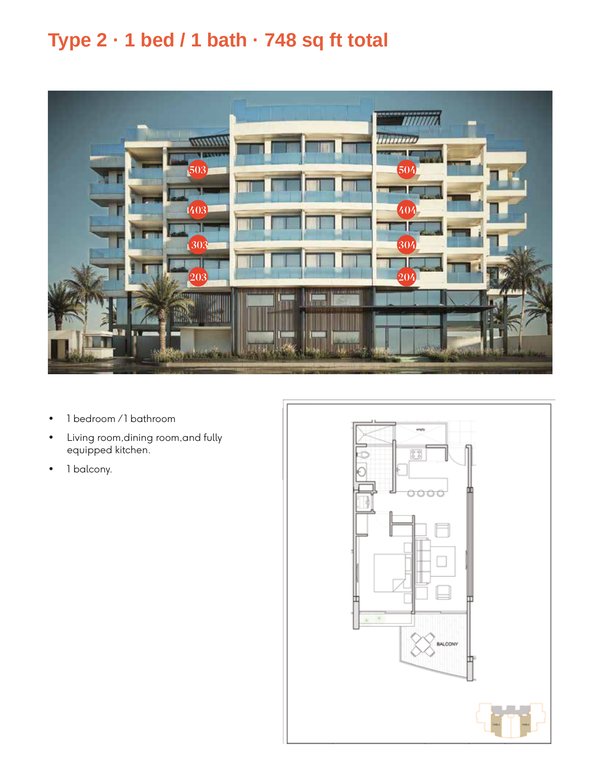
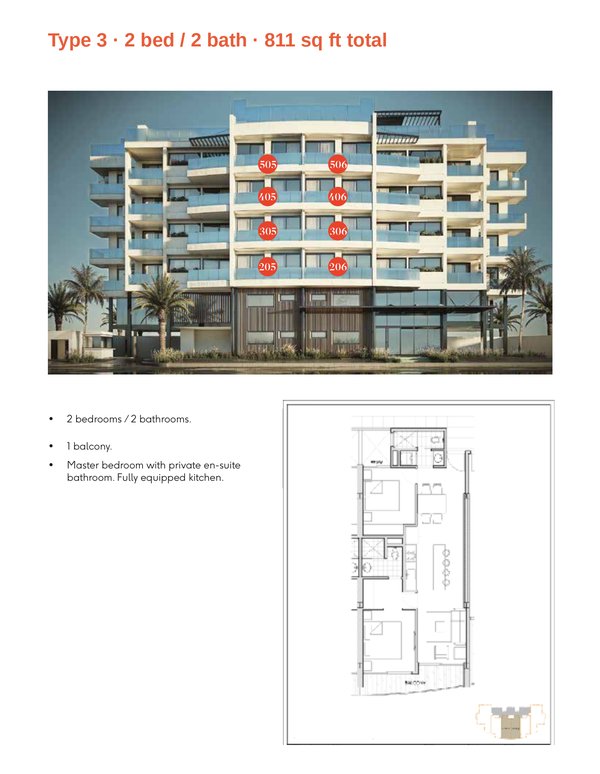
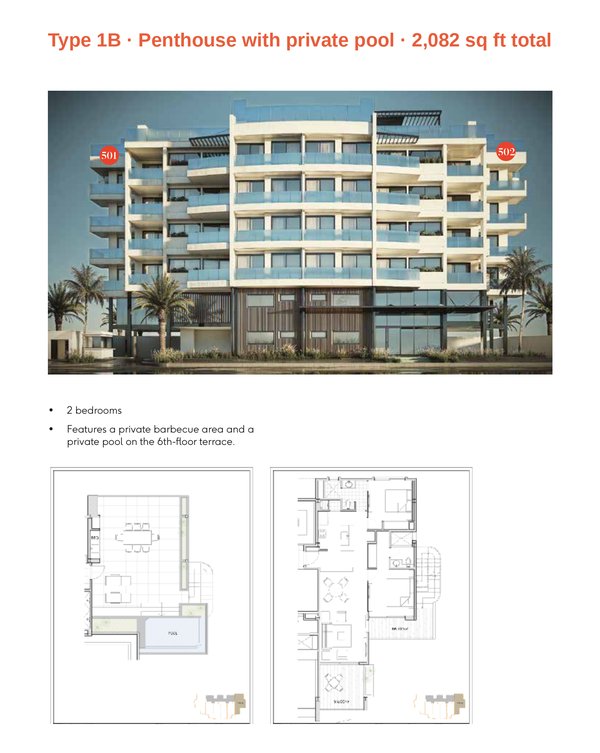
Our building answers the early decisions one particular way. It is an apartment building — 26 residences in Ponton, Oranjestad, from 748 sq ft to 2,082 sq ft of total area including balconies, priced in US dollars from $443,000 — so what a buyer acquires is an apartment right, with automatic membership of the owners' association. Which form of tenure the plots are held under is stated in the deed rather than on this page, and the notary you choose confirms it for the residence you buy.
Being a new build changes the order of events rather than the destination. The civil code allows a building to be divided into apartment rights before it is built, and those rights come into existence when the deed of division is registered. Construction is planned at 18 months, with completion set for Q4 2027, and each residence is handed over finished and unfurnished, under a one-year warranty on labour and materials and a five-year warranty on structural elements. A rental program is available to owners who want one and is entirely optional; the levies above apply to any short stay that is let, whoever manages it.
Common questions
- Can a foreigner buy a home in Aruba?
- Yes. No statutory restriction on foreign ownership of Aruban real estate was found, and individuals and companies based abroad hold property here. Ownership passes by notarial deed and takes effect on registration. It confers no right to live on the island; residence is a separate application.
- Is there a cooling-off period when buying a home in Aruba?
- Aruba's civil code gives a private buyer of a home three days, after being handed the signed agreement or a copy, to dissolve the purchase, unless the transfer has already taken place. It cannot be waived to the buyer's disadvantage. Ask the notary whether it covers your particular contract.
- Can a home on long-lease land be mortgaged and sold?
- Yes. A long lease, erfpacht, lets the holder use and dispose of the land as if owner, including mortgaging it, and it transfers by the same notarial procedure as ownership, sometimes with the grantor's prior approval. Its remaining term and ground rent belong to the parcel, so have the notary read them from the register.
- Do I have to be in Aruba to complete the purchase?
- No. A party may be represented at the deed under a power of attorney, which for buying real estate must be given in writing, and the deed states that authority precisely. Agree with the notary early what form a power signed abroad must take and what certification it needs.
Want the details for your own situation?
Ask about availability, layouts or the buying process, and someone from the sales team will get back to you.
Get in touch